Women, Beauty Standards…and Men

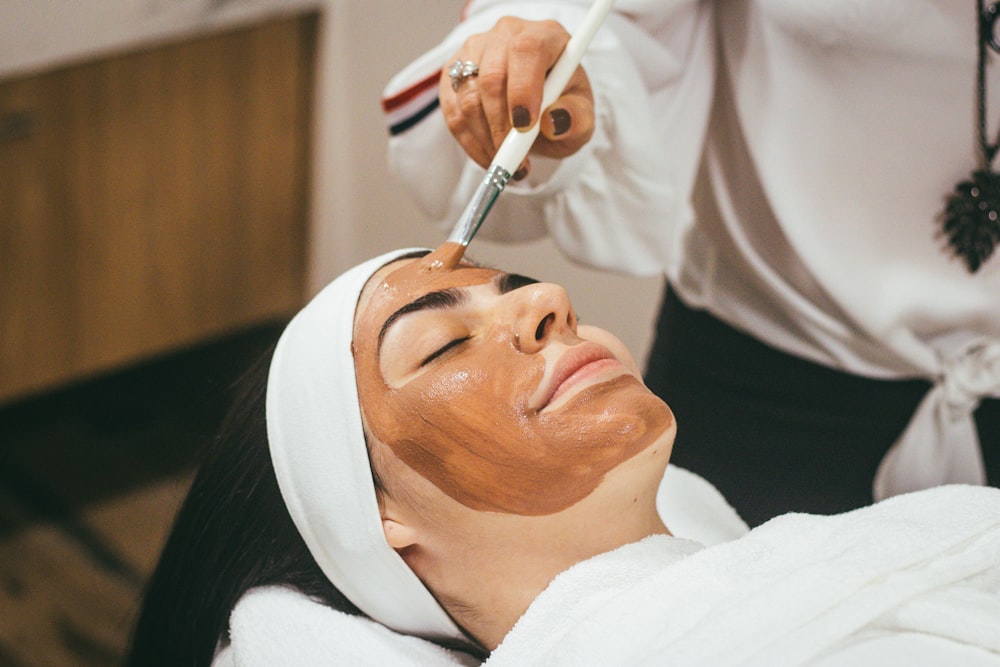
Marek Studzinski on Unsplash

I don’t like choice feminism.

If real feminism were a fruit, choice feminism would be artificial fruit candy, or maybe Fruit Loops cereal. Not nearly as good for you, but much easier to digest…and sell.

By choice feminism, I mean the idea that anything can be an act empowerment if it was freely chosen. Nothing is more important than choice. I’m not advocating taking choices away by any means, it’s just the only criteria for a good choice cannot be that it was a choice.

Maybe after centuries of women being told what to do all the time, the movement designed to help them doesn’t want to start doing it too. Maybe it’s due to feminism becoming mainstream, and too many people are chiming in who don’t want to think critically. But surely if we want to help women we have to be able to talk frankly about choices and consequences.

This is especially evident in the beauty industry, perhaps because of the amount of money at stake. If it makes you feel good, it’s good, even if it’s painful plastic surgeries that mutilate your body and threaten your health. But sometimes feeling good is just fitting into patriarchal beauty standards. It’s not bad to enjoy that; it’s understandably pleasant. But let’s not pretend all joy is your soul self-actualizing and reaching nirvana.

A short walk through any mall reveals ads using phrases like “express yourself,” “be you,” or “empowering” to describe shopping, often for entire categories of products that men don’t even buy. I guess they’ll never get to experience the satisfaction of being themselves or having rights. Or maybe I don’t need to buy pants made by a sweatshop worker in India to express who I am inside. Maybe makeup doesn’t somehow reveal my inner beauty by covering up my actual face.

There’s no way forward when people refuse to say anything is inherently harmful. Empowerment is not simply feeling good. It’s about gaining actual political, economic, social, or personal power. Feminism wanted to create a better world for women than the one where they only power they had was through being sexually attractive to men. It isn’t real power, and it doesn’t last. No one would patronize a man by saying he was empowered when he put on a nice suit or got a haircut. No one would expect them to be satisfied with something so inconsequential.

I recently followed an account on Instagram called @notyourmanicpixiedreamcurl. Helen doesn’t shave, wear makeup, or dye her hair and is critical of the idea that we should. While I don’t see myself giving up makeup anytime soon, I scroll through her content fascinated. One, it’s refreshing to see someone stating a real opinion, and two, she makes a lot of sense. Why is it that the natural female body is seen as disgusting? Why is it that women are told they’re expressing themselves through makeup when they’re actually changing themselves? How is painting on a new face everyday not a message to your psyche that your real one isn’t good enough?  

I’m not sure I’m willing to sacrifice my own attractiveness at the altar of these principles, but the principles themselves are logical. In the end, the thing I most have an issue with is not women trying to be as attractive as possible. It may not be good for us, but it’s understandable, perhaps even instinctive. It was probably completely harmless in hunter-gatherer days because we didn’t have the option to surgically alter our entire bodies. My issue is with pretending this is an empowering, feminist choice just because it’s a choice.

When men care as much about their appearance as women do, it’s strangely unattractive. Many women would be horrified if their husbands started wearing makeup. Why? I’ve heard one theory that it reflects our hatred of women. Men who act like women are making themselves less because women are less. This is possible, but it seems odd to make wearing makeup such an integral part of being female when it hasn’t been for a long time. My theory is that it seems pathetic for a man to put so much weight on his physical appearance because he should know he’s worth so much more than that. But for women, it’s okay because it’s accepted that how they look is the most important thing about them. In a world where that kind of thinking is prevalent, imagine how damaging it is to believe your defining quality doesn’t even exist anymore after you wash your face at night.

If any men are reading this, I’m willing to bet many of them are nodding along agreeing, saying they’ve always said women shouldn’t wear makeup. Theoretically, I should like these men. In reality, I usually don’t. The more often they mention how much they don’t like makeup, the worse they usually are.

Many of them aren’t coming from a place of concern for how makeup affects women. They don’t believe it’s unnecessary because most women are so beautiful without it. The reason they don’t like makeup is because they think women shouldn’t pretend to be more attractive than they are.

It’s not totally illogical. But if no women wore makeup, we would get used to it and the standard would adjust to reflect that. The women you think are attractive with makeup would probably still look attractive. I once heard a man say he thought men were better-looking than women because they don’t need makeup. Newsflash: No one needs makeup. It’s something that exists, people use it, our expectations have adjusted accordingly. The man who hates makeup and expects women to be beautiful without it is so often toxic because our current beauty standards reflect the number of artificial means for enhancing beauty that are available. Without realizing it, makeup-hating men expect women to look that way without any help, which in my opinion is just cruel. The most beautiful women in the world wear makeup and get photoshopped. Most men can’t even tell when someone is wearing makeup. They genuinely don’t realize how unrealistic their expectations are, because very little of what they see around them is totally natural. I would prefer to be around more traditional misogynists who complain about women not putting in any effort to look good because at least they realize an effort is required.

In this strange reversal of common sense, men are giving themselves feminist points for criticizing and shaming women who are trying their best to get by in a world that values them most on things they can’t control. Whenever they try to take some level of control, they’re criticized for being artificial. But it’s hard to forgo the opportunity to be more attractive when going natural usually results in being asked by everyone if you’re sick. I’ve had people stare and even gasp when they see my natural face. I am apparently such a convincing portrait of illness that if I want to skip work, all I need to do is come in the next day bare-faced, and no one questions it. This strategy was once so successful my own students told me it was okay if I wanted to go home and take more time off.

I don’t think I’m an unattractive person, but incidents like these make me wonder. Sometimes I think we have forgotten what natural faces look like. In a world without makeup, my made-up face would be the shock, not the real one. But then I think I’m only telling myself this to feel better, that somehow I’m the only one who looks this way, who manages to masquerade as attractive with the right disguise but falls into hideousness without it. As much as I am defending the human frailty that leads us to paint our faces and even operate on them, beauty culture is still extremely damaging and this is one of the reasons why. Women have become more and more isolated in their insecurities. Just like men, even we don’t know what other women really look like anymore. We only see our own face, with all its flaws, and feel alone and ashamed. Although I wouldn’t put body hair removal in the same category as makeup, it often has a similar effect. Women grow up secretly ashamed of how much hair they have, believing they are a special, defective minority. But the truth is, when everyone removes their hair, no one knows what normal is anymore.  When everyone wears makeup, filters their photos, and dyes their hair; when celebrities almost ubiquitously get nose jobs and Victoria’s Secret models get boob jobs, people forget what natural beauty looks like. They don’t even recognize it as beauty anymore when they see it.

In all of this, people seem to have forgotten that if the most important thing to you about a woman is her appearance, you have missed the point entirely. Looking prettier than you really are is only a crime when looking pretty is terribly important. It’s better to say women don’t need to wear makeup because they don’t need to look good. Men who are afraid of makeup think they’re entitled to a beautiful woman and deceiving them is like robbery. But what if we didn’t care what women did to their faces because their faces just weren’t that important anymore? We don’t live in this world yet—we probably never will—but if we did, it wouldn’t really matter if women wore makeup or not. It wouldn’t damage their self-esteem the same way, we wouldn’t think showing your unadorned face is showing your true self because it isn’t the self at all. Before we criticize something, it’s worth considering why we think the matter is so important in the first place. It all hinges on the idea that women are defined by their appearances, what they do or don’t do with them.

Sometimes, when I feel unattractive, I think about two things to feel comforted. One, it’s God’s fault I’m ugly not mine, so He should feel bad not me. Two, I remember that if the way I look is the most important thing about me, and the best thing, I have truly failed. I have succeeded in something that will surely fade, and failed at everything that really matters. I can’t control what the world values, if people are more impressed by my painted-on face than my personality, but at least I can decide how I value myself. How I feel at night in bed with my eyes closed is more important than anything I see in the mirror.

How To Pick The Perfect Toxic Boyfriend For You

LETRAS.MUS.BR - Letras de músicas

I wanted to make the title gender neutral, but it wasn’t as catchy. I guess complaining about men just has a certain ring to it that’s hard to replicate.

That’s actually not my intention here at all, though. Everyone can be toxic; I’m just writing from my perspective because it’s easier for me. And this post is not about how horrible your boyfriend is. He may very well be pretty bad, but that’s an essay (or book) for you to write. My point is this: Someone else’s toxic behavior is not your fault, but emotionally healthy people don’t accept chronic mistreatment in a romantic relationship.

Are you emotionally healthy? Probably not. Do you want to fix that? Eh, maybe in theory. But on an unconscious level, that’s probably your worst nightmare! This fascinating video first opened my eyes to the idea that we purposely seek out toxic relationships so that we can blame something external for the pain we feel inside of us. The pain was always there, but now we don’t have to take responsibility for it. I don’t know about you, but that seems like the perfect arrangement to never face any of my own issues again.

On the other hand, going through one of the relationships detailed below is a great way to make literally everything else less frightening in comparison. Therapy, loneliness, and acknowledging your mother may have been right about you are usually terrifying prospects. But like most unpleasant things, they’re still much better than dating a psycho.

So, whether you want to remain in denial or seek out pain for the purposes of growth, keep reading. I will help you find the man who perfectly complements your own issues.

The Sadist (And Not In A Good Way)

This man has a diminished capacity for empathy. He would never describe himself as cruel, but when someone lets their feelings take precedence over everything else, cruelty is often the result. He probably prides himself on being brutally honest and having high standards. You will never live up to them. Eventually you will realize that he doesn’t live up to them either. He thinks it’s sweet when you give up things that make you happy because this means you really love him. His love language is blood and tears. But only yours.

He’s perfect for you if you have a victim complex. His behavior will fuel hours of complaints like, “Why do bad things happen to good people?” and, “I’m so nice to him but he doesn’t appreciate me!” Eventually you and your friends will conclude that you just care too much. You’re just too nice. No one will suggest that this is actually a deep-seated issue and that you fear you have nothing to offer in a healthy relationship where both people are nice, or, God forbid, the other person is actually nicer than you. Cue Identity Crisis.

In general, deciding your problem is that you care too much is not adequate self-reflection. It’s like saying you’re a perfectionist when they ask you about your weaknesses in a job interview. It’s more likely your problem is that you really need to believe you care too much.

The Overgrown Baby

This delight needs far more attention than the average adult. He doesn’t just expect you to be his mother, but maybe his father too. You’ll shop for him, make sure he eats properly, and smother him to the point where any normal person would run. He is the college boyfriend who always gets you to do his homework. Some babies even expect you to take care of them financially. If that’s the case, congratulations. You have found a grade-A baby.

He’s perfect for you if you have a void in your life and would rather fill it with a person than meaningful goals. He’s basically a part or full-time job, so you will never feel aimless again. He’s also great if you completely lack self-esteem and believe all you have to offer others is favors. This man needs you, which is perfect because you don’t trust someone to simply want you. Your love language is acts of service. But only your own.

Some of the same points above apply here as well. You don’t care too much, you just care too little about yourself.

The Unavailable Man

He may not be someone you actually date. You might just stalk him a lot from a distance and feel like that constitutes a kind of relationship. He could also be the commitment-phobe you never tie down or have a significant other that he cheats on with you. Bonus points if he’s married. It’s difficult to describe this man in detail because his defining trait is that you don’t really know what he’s like in a committed relationship. He’s unwilling to give that to you. He might happily give that to someone else. Just not you.

He’s perfect if you have a deep-seated fear of vulnerability. By never being available, he allows you to convince yourself that if he were, you would have no commitment issues of your own. You’re just waiting for the love of your life to come around, and then everything will be perfect. In reality, if you genuinely wanted a relationship, you wouldn’t waste your energy on someone out of reach. But you don’t. You want a fantasy because it’s safer. Your love language is lying to yourself.

The Loser

This man may not really be a bad guy, but in the eyes of whatever society you’re in, he’s not a success. He disappoints your parents, gets sucked into pyramid schemes, and makes unfortunate hairstyle choices. His mother thinks he has a lot of potential and hopes you will be the girl who inspires him to live up to it.

He’s perfect if you’re desperate. You just want a man, any man, even one with questionable personal hygiene. Anything is better than being alone. If this is your case, I suggest you go for someone unfairly considered a loser. Give chances to the ugly, the mentally impaired, or the homeless. But even if there is nothing really wrong with the man, he is defined by the fact that deep down, you feel like he is beneath you. And you prefer it that way because he is less likely to leave you.

In an ironic twist of events, dating you may raise his self-esteem and inspire him to upgrade. Your love language is fruitless attempts to control.

This is not an exhaustive guide to toxic men. That is impossible because new ones are being born every minute. If you don’t find your issues here, please feel free to explain them in the comments. I hope you feel after reading this that there really is someone for everyone. Happy hunting.

Everyone Is Not Beautiful

man wearing mud mask

Raphael Lovaski on Unsplash

I usually hear this sentiment applied to women, as in, “Every woman is beautiful.” And my first thought is:

Is it so terrible to not be beautiful that we cannot admit any woman isn’t?

I don’t believe that denying reality helps. It just makes it seem that whatever we are denying must be really terrible if we can’t acknowledge it. People are aware that an attractiveness hierarchy exists, and this kind of rainbows and sunshine attitude doesn’t get rid of the hierarchy; it reaffirms it and insists we are all on the top of it. I just think of Animal Farm. All women are beautiful, but some women are more beautiful than others. Great. Now we are back where we started.

I’m not saying we shouldn’t believe in our own attractiveness. I think everyone is beautiful to someone. I think everyone has beautiful features, both internally and externally. But why is it considered a necessary part of a woman’s self-esteem for her to believe she is beautiful? Wouldn’t it be better to encourage women to believe their worth is not based on how pretty they are? What I hear behind these superficial empowerment messages is: Your value is still based on your attractiveness. That hasn’t changed. But don’t worry, because you’re attractive.

The ironic thing is that I don’t see these people arguing that Trump supporters are beautiful, or misogynists, or Karens. Everyone is beautiful—if they subscribe to a narrow ideology of leftist beliefs. But it doesn’t work that way. People aren’t physically attractive based on whether or not you think they deserve to be. What ought to be is not what is reflected in the world. And if you think what’s on the inside makes someone beautiful (a very nice belief), everyone is still definitely not beautiful.

People don’t talk like this about men. Many men do not consider themselves particularly good-looking, and they don’t care about it one way or another. They believe in other positive qualities that they have. They don’t think the majority of their value depends on their outward appearance. When a man accomplishes something great, we don’t throw in how handsome and sexy he is the way we make sure to throw in “beautiful” when we are proud of a woman.

We wouldn’t say everyone has an above average IQ because that’s statistically illogical, but we would acknowledge that everyone has a talent of some kind. The first statement is incorrect, the second is the truth. The truth is comforting. The truth is that you can be personally attractive without being conventionally beautiful. And if you aren’t particularly attractive, that’s fine too. A pretty face contributes so much less to the world than intelligence, hard work, and good character. It’s a lie to pretend that being valuable attracts as much attention as superficial beauty. But the world doesn’t reward what is should.

We are still obsessed with women’s bodies, and whether we insist on covering them, uncovering them, perfecting them, or going on about how perfect all of them intrinsically are, we are still placing more importance on the body than the woman herself. It is not empowering women to expand the definition of who deserves to be sexualized. Why is it so necessary to tell us every body is a bikini body? I’m not saying don’t wear bikinis, but where is the movement shaming men for not being comfortable in speedos?

It does end up being shaming. You are shamed for not loving your body more. But I think if I really love myself, I should tie it to something more meaningful than my body. I should be able to acknowledge I have features that are not ideal, but not be upset about this because who I am is so much more than that. Men, for the most part, are pretty covered up in everyday life. This isn’t because there is some kind of stigma against their bodies. It’s just that their bodies are not their defining characteristic and so no one cares much about what they wear. People are always telling women to either cover or uncover, but neither of those solves the actual problem, which is that women are defined by their physical appearances.

I am reminded of the words of Courtney Martin: “We are the daughters of the feminists who said, ‘You can be anything,’ and we heard, ‘You have to be everything.’” But it’s lie. You don’t have to be everything. You don’t have to be beautiful, you don’t have to balance a family and a career, you don’t have to love every part of yourself. You just have to be good enough.

What Do I Do After I Figure Out What’s Wrong With Me?

gray monkey in bokeh photography

Juan Rumimpuna on Unsplash

I have been thinking about this question for several months now. I’m at a point where I may still be crazy, but I understand it better than ever. I’ve even figured out how it originated too, except for a few bits that can only be attributed to the generosity of God. But I don’t know what to do with this information.

I’ve always been good at sitting and analyzing my problems. Throughout childhood and adolescence, I made numerous lists of traits I wanted to correct about myself. My sister called this feeling sorry for myself, so I made sure to add that to the list. But these lists did not produce long-lasting results. They did, however, produce more lists.

The internet likes to suggest therapy as a catch-all solution for personal issues, and while I am not disagreeing with that, I’ve often wished that people would go further and explain a bit of the magic that is supposed to happen behind the closed doors of a therapist’s office. It’s like telling someone to go to the gym but no one wanting to explain what you’ll do when you get there. Then, when you finally go, you realize you could have done a lot of it in your own home and no one is blaming your parents nearly as much as you were hoping they would.

Anyway. My point is, a lot of self-improvement/healing is either about forcing yourself to be more productive or simply realizing why you have the issues you do. I have a few problems with this. First of all, I have realized many things in my life and failed to act on these realizations in any meaningful way. Second, if forcing yourself worked, people would keep their New Year’s resolutions.

Here is an example I have been thinking about recently. I procrastinate a lot and although it’s not a huge issue, I’d like to fix it. I have read that procrastination is often motivated by perfectionism, which is great, because I always thought it was because I was lazy. PSA to my high school chemistry teacher, former boss, and entire family: I’m not lazy. I’m seeking perfection. Apparently it’s a very thin line.

Anyway, the in-depth explanation for this did resonate with me. But it didn’t make a difference. I just understand why I procrastinate as I continue to do it. So I discussed this with someone recently, hoping for advice, but she did not offer any solution. She just said, “It’s not about fixing every little thing you don’t like about yourself.”

Strangely, I had never thought of it like that before. I didn’t realize that the purpose of gaining insight might just be to have more sympathy for myself and make slightly better decisions, and that that is enough. Insight is not a stepping stone to overhauling my personality.

Maybe healing and improving are not about fighting your nature to become a well-oiled machine. Maybe emotional health doesn’t manifest as effortlessly getting up at 5 AM each day, liking the taste of green smoothies, and becoming a CEO in your free time. Maybe it’s recognizing you hate that and shouldn’t try to bully yourself into becoming a different person.

It’s terrifying to accept that you will always more or less be the way you have always been, that no big change is coming. But I’ve tried to stay in this mindset the past few days, and I’ve found when you free yourself from constant self-shaming, it’s easier to do more of the small things each day that make your life better. Maybe a transformation is more likely to happen when you stop feeling like one is necessary for you to be worthy of self-acceptance.

I will never be the type-A overachiever I see as the embodiment of success (despite never actually liking these people in real life). I may be a bit of a perfectionist but I’m also lazy, and I can’t keep denying that when I check “Contactless Delivery” while ordering food, not because I fear corona but because I don’t want to change out of my pajamas to answer the door. I’m really bad at anything that pays well or involves sports, I’m scared to call people on the phone, and it’s remarkable how long I can stay in one place without moving. But that doesn’t mean someone else with different flaws would have a better life. (On a positive note, I can out-knit your grandma, and I’m really easygoing as long as you don’t get to know me well.)

Somehow, I’ve been thinking all this time that I could not be okay yet if I still have this many faults.

We cling to the idea of some people having perfect lives even though it’s illogical. We know we’re comparing our behind the scenes to their highlight reel, but we do it because we want to believe it can be a reality, and one day maybe our reality. Deep down, the voice inside of us is saying,

Perhaps, if I just do something differently, I will not have to be myself anymore.

 I didn’t just write lists of my flaws as a child. I also wrote letters to my future self, as well as dramatic diary entries about various book characters and famous people I wished I were more like. Ironically, I actually did become many of the things I hoped for in these letters (except for popular and married at 17). And I was far more like the people I admired than I knew at the time. But even if I had seen these similarities back then, I wouldn’t have believed in them. And I think that takes us back to the original question. What do I do after I figure out what’s wrong with me?

I think the answer is, put down the scalpel, take a leap of faith, and believe in everything that’s right.

I Was There Too

silhouette of woman standing beside body of water
Brannon Naito on Unsplash

There are a few incidents in my life that confuse me because I don’t know how I’m supposed to feel about them. I know that “supposed to feel” isn’t the best phrasing, and I should ask how I actually feel, but I don’t know the answer to that either. It’s just a blank space. This is why I say knowing the “correct” emotional response matters, because sometimes, we won’t allow ourselves to respond unless our reaction is supported by the script of what’s “proper” and “appropriate.”

Many times, I didn’t know how I should respond emotionally. And so I decided it was best not to at all. 3/10 would not recommend this approach to a friend.

One event keeps resurfacing in my mind. I had tried to put my feelings aside. I couldn’t, and I responded to the whole situation by crying. I didn’t say or do anything except cry. Much later, when I revisited the memory, I asked myself how the person in front of me could see so much evidence that I was upset and not react.

It’s a normal question, a healthy question, and it should be asked. But then I realized something else. It wasn’t one person alone in a room. I was there too. Two people saw me crying, and I was the one who cared the least.

I knew better than anyone the pain I was feeling, and I did not think it deserved any recognition. I did not speak about it, I did not act on it, I did not want to have any type of conversation about it. I later denied my tears came from anything except stress.

When I think of the whole situation now, I don’t have any feelings. It’s like I wasn’t there—but I was there. I didn’t want to be. But I was. So I separated from it mentally to such an extent that I don’t know where the part of me who was present and felt everything is. I don’t know where feelings go when we tell them to die. I just know that they don’t die.

Why do we believe we can devalue ourselves and someone will witness it and refuse to let it happen? We have picked the people who are present in our lives. If I do not love myself, I have not picked people based on whether they treat me with love. What we really want is to be agreed with. This is our comfort zone: people who see us as we see ourselves. This is what we surround ourselves with.

I do not become more compassionate when I refuse to be compassionate towards the person I see most often. And I would not call myself compassionate towards others if I saw their pain and “felt bad” for them but didn’t take any measures to help. When you practice detaching from yourself, you practice detaching from everyone. You are a person as well. How you treat yourself is included in the definition of how you treat people, and it is more than a technicality. What we think of as two separate attitudes are connected; they are a reflection of each other.

One of my favorite quotes is from Maya Angelou: “I don’t trust people who don’t love themselves and tell me, ‘I love you.’ There is an African saying, which is: Be careful when a naked person offers you a shirt.”

Culturally, we glorify self-sacrifice. But this type of “love” is like stealing from the poor to give to the rich. The poor are so used to being poor they’d rather stay that way than change (but they’ll tell you it’s really about you), and the rich don’t really want money, they just think it’s sweet that you’re suffering for them. And none of it is real money, it’s all chocolate coins and suddenly everyone is diabetic.

I don’t know if that makes any sense and I think I should stop now because I’m not ready to examine the metaphorical significance of my eating habits. All I’m saying is maybe, most of the time, we really do have what we want most. We just don’t have what we say we want.