3 Ways We Refuse To Take Responsibility For Our Lives

low-angle photography of man in the middle of buidligns

Razvan Chisu on Unsplash

It is interesting to me how much power and agency the average middle-class person has and how often they refuse to use it. Power is a strange thing. Most people do not feel powerful. But I believe we choose not to recognize our own agency and abilities because then we would be responsible for using them, and that responsibility is a very frightening thing.

It is more comfortable to blame others for our unhappiness than to acknowledge that we are where we are largely through our own actions. I read something once along the lines of, “We all have what we want most.” That might seem contrary to your experience, but it’s not wrong. Many people would rather be safe than happy. They might say they want to be rich, but what they want is to continue spending money. They might say they want to meet someone and fall in love, but they would rather not risk rejection.

I have three favorite ways of avoiding responsibility in my own life, but I am sure there are many others. I’m sure I do many more that I haven’t realized yet. But I think if I can work on these, I will be a lot closer to where I want to be.

1. Caring more about being right than reaching goals.

This is a big one in every aspect of our lives. Instead of telling people how we want to be treated, we test them and judge them if they get it wrong. If we really want other people to make us happy, we should give them all the information they need to do that. And we should understand that to increase the chances of successfully getting what we want from them, we should not approach the subject as though we are a victim and they have wronged us. It might be true, but that doesn’t mean it will work.

In other areas, this could manifest as refusing to compromise your artistic vision to be successful (which is fine, but expect to be less successful), refusing to ask for opportunities or promotions because other people should realize you deserve them, or insisting on any course of action after it has been shown to not produce the results you want. On some level, people know what to do to get what they want. They just don’t believe they should have to do it.

2. Believing choices that would cause conflict are not options.

How often do we say, “I can’t do x, y, or x,” but we really mean that it would be uncomfortable or cause a conflict with someone else? This sounds like, “I can’t marry the person I want because my family wouldn’t approve,” or, “My husband won’t let me have male friends.” It’s nice that you don’t want to upset people, but you are making a choice. People do not have nearly as much control over you as they would like you to think.

It is not wrong to upset other people or say no. It’s unpleasant, but if you can learn to live with that feeling, you will finally be free.

You might say that you can’t stand up for yourself. But this probably doesn’t mean you can’t, it means that perhaps it makes you very anxious or you start crying. But you can still speak your mind even if you are crying. You do not have to do something perfectly for it to be effective.

Part of the reason why we are reluctant to risk conflict is we don’t have good conflict resolution skills. I personally have spent more of my life focusing on conflict avoidance skills. These boil down to trying to be polite, apologizing quickly, and giving in. To many people, it is a terrifying thing to honor your own wishes knowing that it will upset someone you love. Beneath that is the unspoken belief that they will no longer love you if you have caused them anger. We believe we do not have enough to offer to still be worth it after we have upset them. Which is strange, because the people who usually feel this way are upset by others all the time and still care about them.

The ironic thing is that we would not struggle so much with conflict if we weren’t expecting someone else to fulfill the needs we refuse to meet ourselves. The confrontation becomes weighted and intense because so much relies on the other person responding how we desire. On the flip side, every person who takes responsibility for their own happiness makes it easier for everyone around them to do the same. If I meet my own needs, I will not be upset by what you need to do to meet yours. If I know my boundaries, I will not be torn when you ask me to violate them. I will simply say no, calmly and politely, because what really affects us is feeling powerless. I will be upset by attempts to manipulate me if I fear that they might work. I will be upset by insults if I secretly agree with them. If I know who I am and that I deserve to be happy, I will have no desire to control someone else. (Or at least a significantly decreased desire. No one’s perfect.)

3. Externalizing insecurities and hoping others will fix them.

I have not thought about this one as much as the others, but I think it is still valid. I have noticed that people tend to gravitate towards those who see them the way they see themselves. That’s not inherently negative because hopefully the way you see yourself is not inherently negative. But let’s be realistic. It frequently is.

Instead of facing our self-doubt, we look for someone who doubts us as well and try to win their approval. If we can convince them, maybe this is proof that we should believe it ourselves. And this process only works with people who see the flaws we are self-conscious about.

I see this happen a lot in romantic relationships. People chase those who don’t like them because they don’t like themselves. It’s not very reassuring to prove yourself to someone who already likes you. This person just seems to have low standards to us. No, we want someone perhaps even harsher than ourselves. And this is why we stay with people who are critical and put us down. We think, “If I can get this person who hates x, y, or z about me to think I’m great, imagine how wonderful I must seem to all the people who already thought I was fine.” Perfectionism, the root of a lot of self-esteem issues, wants us to reach a state where we are immune to criticism or disapproval. So no wonder we would be more interested in the people who don’t value us. We really think they can’t exist for us to be okay.

If you value yourself, the whole conflict disappears. When you really, really value yourself, you realize how powerful and capable you are. And you force yourself to act on it even if it might be difficult at first. Growth is not supposed to be comfortable. Think of how much babies cry when they get teeth. But it’s all worth it in the end, because they finally get to eat real food.


How to Use Your Pain to Get Ahead

silhouette photo of man on cliff during sunset

Zac Durant on Unsplash

Life is a traumatic event and everything we do is a coping mechanism. Some coping mechanisms are just more socially acceptable than others.

Some of our greatest triumphs are the result of attempting to escape our suffering. And because that suffering doesn’t go anywhere, we have an endless source of motivation, spurring us on to greater and greater heights. Does it make sense to run from pain when you’ll never escape it? No, not really, but logic doesn’t hold most people back, so don’t let it stop you either.

Society looks down on people who feel like they have a void inside, as if this is due to a lack of personal development. But the natural response to a void is to create or find something to fill it. This, in essence, is productivity. They say necessity is the mother of invention, but maybe it’s deep personal pain. Maybe they’re the same thing.

Before I continue, I would like to say there is a level of pain where you can’t get out of bed, and a slightly lower level of pain, where you get out of bed but spend all day trying to prove your worth. Psychiatrists exist for the first. Paychecks exist because of the second. This article is about aiming for the second, not the first.

Suffering and insecurity are responsible for many of the positive elements in our lives, or even physical things we enjoy. Would obnoxious sports cars exist if poorly-endowed men didn’t? Would Marilyn Monroe’s movie career have happened if her father had loved her? (Daddy issues are responsible for many things on the internet but I’m not going to get into that here.) I for one become funnier when I am tired or unhappy because stress lowers my concern for my dignity.

I believe our innate brokenness is responsible for most of our social relationships. If people were as emotionally self-sufficient as self-love twitter tells us we should be, they wouldn’t connect with others very much. But to triumph over loneliness while remaining alone is not really an admirable goal. If we did not experience pain in being alone, we would have no motivation to tolerate the pain inherent in existing with other people. A problematic level of suffering makes us accept abuse and toxicity just because it’s better than being alone, but a nice, reasonable level of pain pushes us to do scary things like leave the house and speak to other people. I certainly wouldn’t do it if the alternative wasn’t so much worse.

Pain not only gives you friends, it makes you work harder. The only reason I’m writing this blog post at all is because I asked a friend to publicly shame me if I did not publish a post every Thursday. I’m not motivated enough by the desire to improve myself, get somewhere in life, or be successful. I don’t have a clear vision of my future or a lot of self-discipline. But what I do have is an endless reservoir of shame, and it’s time I got something out of it besides insomnia. I doubt I would even have a blog if I genuinely loved myself.

If you are anxious or an overthinker, you are the perfect candidate for this method. My current strategy to avoid having thoughts is to crochet constantly. This has the added benefit of impressing friends and family, a great band-aid on the lack of social acceptance I experienced as a child. The only drawback is severe eyestrain and a return to the migraine medication I haven’t needed since I stopped teaching high school. But everything has a plus side, and painkillers are definitely, definitely not an exception.

How exactly you make your pain work for you depends greatly on your individual methods of suffering. Consider getting therapy to unearth the root causes of your issues so that you can exploit them more adeptly. As a general rule, though, failure of any kind is a push forward because you have less to lose. What you fear has already happened. There’s no way but up. If you continue to fail, at least that’s not as scary as change! Phoebe Buffay covered this topic better than I ever could in this commencement speech.

A few people have asked me what the point is of some of these “self-help” articles I write. After I wrote “Life Hacks For The Emotionally Stunted,” someone remarked, “I don’t feel like I’m supposed to follow this advice.” My purpose is not, actually, to tell anyone how to live correctly. It’s just to make you look at things from a different perspective. Maybe life is not as bad as you think. Maybe it’s actually much worse. You decide.

What Do I Do After I Figure Out What’s Wrong With Me?

gray monkey in bokeh photography

Juan Rumimpuna on Unsplash

I have been thinking about this question for several months now. I’m at a point where I may still be crazy, but I understand it better than ever. I’ve even figured out how it originated too, except for a few bits that can only be attributed to the generosity of God. But I don’t know what to do with this information.

I’ve always been good at sitting and analyzing my problems. Throughout childhood and adolescence, I made numerous lists of traits I wanted to correct about myself. My sister called this feeling sorry for myself, so I made sure to add that to the list. But these lists did not produce long-lasting results. They did, however, produce more lists.

The internet likes to suggest therapy as a catch-all solution for personal issues, and while I am not disagreeing with that, I’ve often wished that people would go further and explain a bit of the magic that is supposed to happen behind the closed doors of a therapist’s office. It’s like telling someone to go to the gym but no one wanting to explain what you’ll do when you get there. Then, when you finally go, you realize you could have done a lot of it in your own home and no one is blaming your parents nearly as much as you were hoping they would.

Anyway. My point is, a lot of self-improvement/healing is either about forcing yourself to be more productive or simply realizing why you have the issues you do. I have a few problems with this. First of all, I have realized many things in my life and failed to act on these realizations in any meaningful way. Second, if forcing yourself worked, people would keep their New Year’s resolutions.

Here is an example I have been thinking about recently. I procrastinate a lot and although it’s not a huge issue, I’d like to fix it. I have read that procrastination is often motivated by perfectionism, which is great, because I always thought it was because I was lazy. PSA to my high school chemistry teacher, former boss, and entire family: I’m not lazy. I’m seeking perfection. Apparently it’s a very thin line.

Anyway, the in-depth explanation for this did resonate with me. But it didn’t make a difference. I just understand why I procrastinate as I continue to do it. So I discussed this with someone recently, hoping for advice, but she did not offer any solution. She just said, “It’s not about fixing every little thing you don’t like about yourself.”

Strangely, I had never thought of it like that before. I didn’t realize that the purpose of gaining insight might just be to have more sympathy for myself and make slightly better decisions, and that that is enough. Insight is not a stepping stone to overhauling my personality.

Maybe healing and improving are not about fighting your nature to become a well-oiled machine. Maybe emotional health doesn’t manifest as effortlessly getting up at 5 AM each day, liking the taste of green smoothies, and becoming a CEO in your free time. Maybe it’s recognizing you hate that and shouldn’t try to bully yourself into becoming a different person.

It’s terrifying to accept that you will always more or less be the way you have always been, that no big change is coming. But I’ve tried to stay in this mindset the past few days, and I’ve found when you free yourself from constant self-shaming, it’s easier to do more of the small things each day that make your life better. Maybe a transformation is more likely to happen when you stop feeling like one is necessary for you to be worthy of self-acceptance.

I will never be the type-A overachiever I see as the embodiment of success (despite never actually liking these people in real life). I may be a bit of a perfectionist but I’m also lazy, and I can’t keep denying that when I check “Contactless Delivery” while ordering food, not because I fear corona but because I don’t want to change out of my pajamas to answer the door. I’m really bad at anything that pays well or involves sports, I’m scared to call people on the phone, and it’s remarkable how long I can stay in one place without moving. But that doesn’t mean someone else with different flaws would have a better life. (On a positive note, I can out-knit your grandma, and I’m really easygoing as long as you don’t get to know me well.)

Somehow, I’ve been thinking all this time that I could not be okay yet if I still have this many faults.

We cling to the idea of some people having perfect lives even though it’s illogical. We know we’re comparing our behind the scenes to their highlight reel, but we do it because we want to believe it can be a reality, and one day maybe our reality. Deep down, the voice inside of us is saying,

Perhaps, if I just do something differently, I will not have to be myself anymore.

 I didn’t just write lists of my flaws as a child. I also wrote letters to my future self, as well as dramatic diary entries about various book characters and famous people I wished I were more like. Ironically, I actually did become many of the things I hoped for in these letters (except for popular and married at 17). And I was far more like the people I admired than I knew at the time. But even if I had seen these similarities back then, I wouldn’t have believed in them. And I think that takes us back to the original question. What do I do after I figure out what’s wrong with me?

I think the answer is, put down the scalpel, take a leap of faith, and believe in everything that’s right.

In Defense of Binge-Watching Television

black flat screen tv turned on displaying 11

Mollie Sivaram on Unsplash

Ever since childhood, I’ve had a wide variety of interests. Skimming through the books in my old room takes me back to some of the phases I went through: Origami Magic, HTML in a Week, How to Win Friends and Influence People, The Complete Idiot’s Guide to Ballroom Dancing, Ballet for Dummies. On an unrelated note, I may have also had low self-esteem.

Most of these interests did not go anywhere. I revisited Origami Magic recently, thinking it might be easier for me now than it was in first grade, only to find I had actually regressed. I still haven’t learned to spin wool even though I bought a spindle in 2016, and as you might have guessed, very few people learn how to dance from books. My career as a pianist lost steam around the time I saw a four-year-old Chinese boy play the hardest song I knew better than me. I thought recently about what I had actually stuck with long-term, and a common theme emerged. I have become really good at hobbies that can be done while watching TV.

The TV, our most devoted quarantine friend, has been the subject of considerable criticism. It’s been accused of wasting our time, ruining our morals, and turning our children into idiots. I once had a parent claim it was why her son hit me and chased me with a pair of scissors. “Too much television,” she sighed. (I had a slightly different theory.)

Maybe we are just looking at it too negatively.  The TV is a valuable tool–if we just understand how to use it properly. It actually benefits us in many ways.

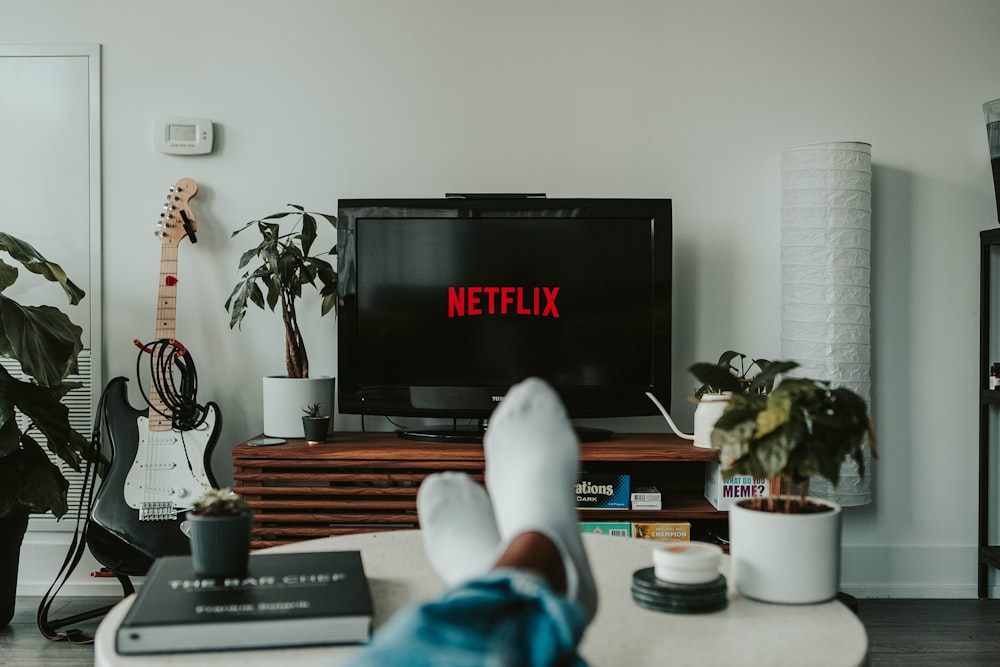
It immobilizes people, for one thing. Especially children. Anything that keeps a child still, in one place, without warranting a call to Child Services, can’t be all bad. But even adults benefit from sitting. I Love Lucy was so popular in the 1950s that the crime rate in New York went down when it was on the air. Mobile adults go to war, take advantage of the working class, and accidentally impregnate each other. If more time were spent Netflixing than chilling, the world would be a considerably less sinful place. Studies show that couples with TVs in their bedrooms get less action. And less action is exactly what God wants you to have.

On a serious note, you actually will amp up your productivity if you can combine repetitive activities with television. If you want to learn something new, consider knitting or crocheting just because of how TV-friendly they are. Know thyself, and therefore aim low. Use TV to motivate you to exercise, attempt a tedious recipe (like stuffed grape leaves), or do housework. Get creative with finding ways to do your usual activities from the sofa. Watching TV from exciting new positions is a great way to start doing yoga. Is your favorite show just as good upside down? Let’s find out!

It may be sad that we find it so difficult to focus on one thing at a time these days, but does feeling bad about that somehow improve your attention span? No. So accept it and use it to your advantage. Sometimes the way to accomplish more is to numb out your brain.

TV quiets your mind, or kills it, as my mother would say. But that’s not all bad. There is an old joke that says the only reason you believe your brain is the most important organ in your body is because your brain is telling you that. The truth is, your brain is overrated. Even my brain is overrated. How many problems do we create for ourselves by worrying, ruminating, or coming up with excuses? All of these things are functions of the brain. Sometimes the answer is to think less.

Television gives you that. It gives you temporary reprieve from the agonies of your mind. And it isn’t simply a distraction, a way to deny reality until you finally turn it off. Stories help us cope with the hardships in our lives, no matter what form they come in. They give our struggles meaning and teach us to believe in happy endings. When times are really bad, we need the most easily accessible types of stories to comfort us. You might not feel like reading Dickens or Tolstoy when you get divorced or find out your parents never wanted you to be born. But you will turn on the TV.

Most sitcoms deal with topics that are very serious, but we laugh about them. This is their magic. If the characters we love can laugh through a tragedy, it tells us that maybe we can too.

At the end of the day, I even believe TV can motivate people to succeed. At some point, after spending hours watching other people do stuff, you’re going to want to do something of your own. Project Runway makes me sew more, cooking shows make me cook and consequently eat more, which is precisely why I don’t watch them. You will want to do what you see. One of the reasons we watch TV is because it is aspirational. It shows us who we could be, in another life with good lighting and makeup men. If you are confused about who you are, look at what you like to watch. Look at the characters you love. What speaks to you and makes you keep watching long after your backside gets sore and your eyes burn? Don’t, however, take it too literally. Liking Breaking Bad does not mean your destiny lies in drugs. But it could mean you desire more adventure in your life. I’ve always gravitated towards heartwarming comedies because adventure and action are exactly what I don’t want. I want security and positive relationships. And, after I watch The X Factor, to be wildly famous.

In a nutshell, how can you discover your life purpose, finally start working out, and conquer the intrusive thoughts in your head about how you’re a stain on the reputation of your family? It’s easier than you think. Just watch more television.