You’re Not Spiritual, You’re Just an Asshole

Zac Durant on Unsplash

Ten years ago, if I had met someone who told me they were on a spiritual journey, I would have been enthralled. Now, I’m more likely to run the other way. It’s not that I hate spirituality. I think it’s amazing. I even follow @theholisticpsychologist, although sometimes I wish I didn’t. It’s just that when I think of a spiritual person, I think of someone humble, deep, and capable of experiencing life on a whole different level. What I usually get is someone who hates their father and is too busy finding themselves to commit to lunch plans.

It just seems like spirituality has become a trend, and while a helpful philosophy becoming popular should be a good thing, that tends to not be what happens. Whenever something becomes mainstream, it automatically loses a lot of its nuance. It has to in order to be accessible to average people who haven’t looked at the subject in depth and probably aren’t interested in making radical changes to their lives. Susan who practices five minutes of daily mindfulness wants to reduce her anxiety, not find the source of all human suffering.

It’s not bad to simplify concepts to help a normal person live a better life. But we have to be careful. While we acknowledge that religion can easily be misused or misapplied, spirituality isn’t regarded with the same suspicion (despite spawning its own fair share of sexual predators).

One of the first problems with the current discourse around self-help and spirituality is that the same messages are being sent to very different people, who may not have enough self-awareness to determine what applies to them and what doesn’t. There is a lot of focus on being yourself, saying no, and not being responsible for other people’s feelings. That’s exactly what some people need to hear. However, it’s not as many people as you might think, despite the vast number who will tell you their toxic trait is “being too nice.” After all, the problems in our lives tend not to be caused by having too many unselfish people around us. Many people would benefit from being less self-centered—being encouraged to help others and think less about their own desires. When only the first message is circulated, everyone picks it up, and what happens is much like when a narcissist or psychopath sees a therapist. They don’t change, they just learn how to dress up their self-centered behavior in fancy words that make it harder for others to argue with. Disagree with someone like this and expect it to be labeled gaslighting, shutting down all further discussion because a difference of opinion is now a psychological manipulation tactic. Expect a certain standard of behavior from them, and you will be treated like you’re codependent, trying to change them, or too attached to whatever aspect of the conventional world best dismisses your point. To the toxic woke person, the only emotionally healthy people are those who don’t ask anything of them.

The second big problem is that the spiritual quest is often seen as seeking your authentic self, but what gets left out is that the authentic self in a spiritual sense is the part of you that is closest to God or a higher power. It’s not your personality or anything we mean by the self in the usual context. Monks and nuns sometimes practice cultivating an inner and outer silence in order to more clearly hear the voice of God in their heads. You probably know the voice they’re referring to even if you wouldn’t describe it as God. Essentially, the personality needs to be subdued for the higher self to emerge. This means abandoning your ego and surrendering to something greater than yourself. When this distinction about the meaning of the true self is lost and you remove the connection to some type of higher power, even if it’s just the universe, the result is a radical change in purpose. The end goal becomes you and figuring out what you want. But the destination at the end of the journey should not be you. It should be letting go of you.

This isn’t because it makes you a better person or more pleasant to be around, although it does both of those things. It’s because this is how spirituality will make you happier in the end. The person who goes for a walk in the woods or sits by the ocean and feels lighter and freer feels that way because they’ve been reminded of how unimportant their own worries are compared to the vastness of the universe. They feel small and insignificant, but not in a bad way, because they are also a part of the world that has just left them wonderstruck. This person has just let go of a bit of their ego and felt connected to something more important.

These are the things that bring a person peace–connection to something more, seeing our problems with perspective, feeling that we bring something of value to the world, loving and being loved, and being in control of ourselves. None of these things are easy, but any path towards fulfillment that doesn’t include them is going to be incomplete.

For some reason, spirituality has a reputation for being Religion Lite—all the fuzzy feelings associated with it without the annoying parts. No rules, only vibes. In reality, spirituality is the purpose behind the rules of religion. In his book The Perennial Philosophy, Aldous Huxley discusses the concepts all religions have in common, and it’s not things like having one god or respecting your parents. It’s that rules and spiritual practices like praying and fasting are designed with the goal of diminishing your ego so that you submit to the will of God. All religions are meant to achieve this. People would rather argue about what the rules are or whose rules are better than look at the big picture, which is that the rules are there to teach you discipline. This matters more than the rules themselves.

I don’t say this to glorify religion. I just say it to illustrate that the idea of the spiritual path being easier than the religious one is based on a misunderstanding. Spirituality is the ultimate goal of religion and choosing it means taking responsibility for your own development instead engaging in rituals mindlessly. This is actually harder than just being religious. The spiritual person prays because they know it’s good for them. The religious person prays because they think God will punish them. For most people, threats are much more effective.

Spirituality that brings you only to yourself and your desires isn’t real. Any philosophy that results in you focusing on your own feelings all the time isn’t going to make you a better person. It can be necessary somewhere along your path to go through a period of self-absorption, but the purpose of understanding your trauma and emotions isn’t so that you can indulge them—it’s so that you overcome them. The next step should be moving forward.

If that next step isn’t reached, if the goal is focusing on the self for its own sake, you will get the problems we see around us. People will break commitments because being authentic to their (passing) feelings takes precedence. They will mis-interpret self-acceptance as an excuse to never grow, and a reason why no one should ever criticize them. Boundaries will be set from a place of avoidance instead of courage.  You might have met examples of this in real life, perhaps in friends who think they should never be uncomfortable, or men who tell you how unenlightened you are when you ask them to stop sleeping with other people.

This type of spirituality involves avoiding discomfort rather than facing it, except perhaps the discomfort in cutting off relatives who vote Republican. I think we should bring back the type of spirituality people have to suffer for. What happened to meditating forty days under a tree, giving up your worldly possessions, or taking a vow of silence? Some monks clean as a form of meditation. In certain convents nuns are not allowed to look at themselves in the mirror to discourage vanity. Most people now would say, “There’s no real point to doing these things,” not understanding that the whole point is that it’s difficult. Doing hard things changes you, or at least teaches you something. I don’t believe you need to go to these lengths to develop a beneficial level of spirituality in your life, but if I’m going to be taking advice from someone, I’d rather take it from the person who spent a year challenging themselves than the person who spent a year doing whatever they wanted.

Human beings are better off when they don’t make themselves their own gods, usually because they aren’t very good at it. Much like children, we are happier with limits than when we follow our every whim. Relying on a consistent set of principles frees you from the burden of constantly evaluating your inner state to determine what to do next. And understanding how little we can control, even about our own futures, puts us in the frame of mind to accept what happens with grace. Religious people are often happier because they have given up the burden of believing they are the ultimate authority on their lives. Whatever is planned for them may be what’s best, even if it isn’t what they thought they wanted.

In the end, the easy way out is never real. Selfish people will always find a way to continue being selfish if they want to, so perhaps blaming it on poorly explained spirituality isn’t going to change them. But maybe looking at a more nuanced perspective will help the people who encounter them. Don’t be impressed or guilted when someone hits you with words that could have been picked up from the explore page of Instagram. Instead look at their actions. Is their life a good example of strong values? Has their brand of spirituality changed them for the better? Perhaps more importantly, has it affected the people around them positively? If not, smile, nod, and run the other way. The wolf who admits he is a wolf can be dealt with. The wolf who believes himself to be a sheep is impossible.

Johnny Depp v. Amber Heard and the Contradictions of Cancel Culture

If nuance and subtlety were rain, the internet would be a desert. This has never been clearer than in the recent Johnny Depp v. Amber heard court case. 

The reality of the case seems to matter much less than what it appears to symbolize—although what, exactly, that is depends on who you support. Somehow this case is both a victory for abuse victims and a blow, a step towards recognizing men can be victims of abuse but actually a step backwards because it shows how misogyny will always win. At different times throughout the soap opera of Heard and Depp, we’ve been told it’s a moral duty to condemn an abuser and also that we can never know what goes on behind closed doors, depending on who happens to look bad at that moment.

Let me break down the trial as simply as I can. Most people who watched it found Heard’s testimony strange and inconsistent and were shocked by the evidence of her violence. While Depp’s team may not have proven without a doubt he never hit her, I do think they showed she was the primary aggressor and most of his actions were probably reactive or in self-defense. Depp did lose his UK libel suit, but the situation was very different, and I personally agree with that verdict. You can’t punish a newspaper for publishing what they believe to be true.

If Heard had claimed Depp hit her a few times over the course of their marriage and stopped there, she might have won. She has some evidence of that. But she talked about incidents of abuse so horrific that it’s impossible they left only a few bruises that could be covered by makeup. Heard’s problem is not that no one believed her evidence. Her problem is that her evidence does not match her own version of what happened.

Mainstream media still portrays Amber Heard as a victim, and supporters of Depp are confused that standing up for an abused man is not only not part of the Me Too movement, but apparently makes them politically right-wing instead. It’s almost like each side watched a completely different trial. It doesn’t seem to make any sense. But it is logical if you understand what’s going on. 

Me Too, and all social movements really, are not simply about correcting injustice. They are about fighting against widespread, unjust power dynamics. Me Too is less about supporting all victims of abuse and more about taking power away from abusive men, which may seem like a subtle difference, but it’s not. We live in a post-modernist world that is obsessed with privilege and hierarchies of power, which are both very real things, but sometimes the result is that the group you belong to matters more than who you actually are, an ironic effect of efforts to reduce racism and sexism. Amber Heard has been supported not because she is fighting against Johnny Depp the person, but because she is fighting against Johnny Depp the symbol of white male power. Depp is not supported by the liberal media because there is no social change in the triumph of a man maintaining his privilege and power at the expense of a woman. 

Celebrities as a whole are not cancelled because they’re bad people, but because they’re perpetuating whatever ideas are currently deemed harmful to the disempowered. This is why Amber Heard potentially lying about abuse claims means she’s an “imperfect victim,” whereas Depp’s misogynistic text messages mean he can’t be a victim at all. 

If Heard were a man and Depp were a woman, the interpretation of this trial would be completely different. And that alone tells you people are not looking primarily at the facts of what happened.

It also shows we don’t want to talk about why we don’t take women’s violence seriously. It seems inconsistent, but it’s not totally unfair. Violence by a man against a woman is not the same as violence by a woman against a man because, in most cases, the man is much stronger. That doesn’t make it fine for a woman to be violent—it just means that the situation is not equivalent. Worst case scenario, a man willing to hurt a woman to get his way, will get his way, and at a high cost. A woman willing to hurt a man is relying on him being too moral to hit her back, but still knows that if he does, she’s not coming out ahead. We should not, in a misguided attempt to bring about equality between men and women, insist that women are just as strong as men, because that ignores one of the main reasons there is such a power imbalance between the sexes in the first place.

This doesn’t mean violence is acceptable in a relationship from either party, or that the reaction to the trial is fair, but it’s worth noting that Depp seemed less concerned by Heard’s violence than by her slander, probably because that’s what traumatized him more. Even Depp’s supporters focus more on Heard’s hypocrisy than her physical brutality.

If you want to support Amber Heard because you don’t think women’s violence is very damaging to men, at least acknowledge it so that an honest debate can take place. No one wants to say it out loud because it sounds bad, but there’s no way Heard would be defended like this if a double standard didn’t exist. And while I understand why it exists, you don’t need to be able to kill someone in a physical fight to emotionally damage them. No one physically abuses without emotional abuse. Male victims still matter even if the specific aspects of the abuse that damage them the most are different from what would traumatize a woman.

So is this a victory for male victims? Perhaps. But really, Depp supporters are celebrating because now men can be believed, not because now they can’t be abused. It’s not exactly the same thing. Me Too was a reaction to centuries of tolerance of the sexual misconduct of men in power, and the pendulum swung to the other extreme when it was asserted that we must “believe all women.” And that’s what always happens, because what’s needed to cancel one extreme is a movement towards the opposite extreme. It’s not based on pure truth (I mean, try telling Emmett Till women never lie) but because we can’t fight against something horribly bad with moderation. But now the support of Depp and the distasteful, misogynist glee in the fall of Amber Heard is not solely about them. It’s a reaction to the fact that we were asked to suspend critical thinking skills when dealing with a woman’s story or else be labeled bad people. That’s not a rational or sustainable point of view. It only works as long as women have no power and only face negative consequences for speaking out, the very situation it’s trying to change. Once it succeeds, it stops making sense.

Regarding the trial, as much as we want to make it a symbol of something more, it may not end up being that. It’s not like the O.J. Simpson trial did anything to change the justice system’s treatment of black men. If anything, it showed us the error of making a case concerning individuals about the groups they belong to. True justice is not going to consider the implications of the verdict on others as a factor. It will look at the situation at hand only and the people involved as they are. It will not be swayed by ideologies, stereotypes, or agendas.

Is it true that the verdict will make it harder for victims of abuse to speak out, for fear that they can be sued for defamation? This depends on whether victims see themselves reflected more in Depp or in Heard. If they relate to Depp, they will see the trial as proof that everyone can be against you in the court of public opinion, but that it’s still possible to be vindicated. If they resonate with Heard, they probably will be less likely to speak out. But just because the majority of abuse victims are women does not mean they feel represented by Heard, especially if they actually watch the trial.

To be honest, it’s hard to feel represented by either person in this case. If I am ever physically abused, I won’t have the millions to pay for a powerful legal team. I won’t have the testimony of an entourage of bodyguards and personal assistants, and no one’s going to ask me to write an op-ed for the Washington Post. If I speak out about it, I won’t get sued for defamation because most people don’t pay any attention to what I say anyway. The whole situation is so far removed from my reality and the reality of the average person that I wonder if it will actually change anything at all. The main effect it’s had on me is that now I sometimes narrate my thoughts to an invisible jury and tell my husband I’m going to blackmail him whenever I get a bruise.

What is the real takeaway from the trial, then? Everyone will see something different in it, but I was struck by how times have changed in the sense that we crucify people for different things, but we still delight just as much as always in a public execution, and we’re still just as convinced we’re right, every time. Maybe we should consider instead that our opinions and values aren’t universal truths even if they feel that way. Maybe we should be aware that mainstream views are always overly simplified. And maybe, most importantly, we should recognize the harm in any ideology that shames others into thinking less in order to make them believe more.

In Defense of Binge-Watching Television

black flat screen tv turned on displaying 11

Mollie Sivaram on Unsplash

Ever since childhood, I’ve had a wide variety of interests. Skimming through the books in my old room takes me back to some of the phases I went through: Origami Magic, HTML in a Week, How to Win Friends and Influence People, The Complete Idiot’s Guide to Ballroom Dancing, Ballet for Dummies. On an unrelated note, I may have also had low self-esteem.

Most of these interests did not go anywhere. I revisited Origami Magic recently, thinking it might be easier for me now than it was in first grade, only to find I had actually regressed. I still haven’t learned to spin wool even though I bought a spindle in 2016, and as you might have guessed, very few people learn how to dance from books. My career as a pianist lost steam around the time I saw a four-year-old Chinese boy play the hardest song I knew better than me. I thought recently about what I had actually stuck with long-term, and a common theme emerged. I have become really good at hobbies that can be done while watching TV.

The TV, our most devoted quarantine friend, has been the subject of considerable criticism. It’s been accused of wasting our time, ruining our morals, and turning our children into idiots. I once had a parent claim it was why her son hit me and chased me with a pair of scissors. “Too much television,” she sighed. (I had a slightly different theory.)

Maybe we are just looking at it too negatively.  The TV is a valuable tool–if we just understand how to use it properly. It actually benefits us in many ways.

It immobilizes people, for one thing. Especially children. Anything that keeps a child still, in one place, without warranting a call to Child Services, can’t be all bad. But even adults benefit from sitting. I Love Lucy was so popular in the 1950s that the crime rate in New York went down when it was on the air. Mobile adults go to war, take advantage of the working class, and accidentally impregnate each other. If more time were spent Netflixing than chilling, the world would be a considerably less sinful place. Studies show that couples with TVs in their bedrooms get less action. And less action is exactly what God wants you to have.

On a serious note, you actually will amp up your productivity if you can combine repetitive activities with television. If you want to learn something new, consider knitting or crocheting just because of how TV-friendly they are. Know thyself, and therefore aim low. Use TV to motivate you to exercise, attempt a tedious recipe (like stuffed grape leaves), or do housework. Get creative with finding ways to do your usual activities from the sofa. Watching TV from exciting new positions is a great way to start doing yoga. Is your favorite show just as good upside down? Let’s find out!

It may be sad that we find it so difficult to focus on one thing at a time these days, but does feeling bad about that somehow improve your attention span? No. So accept it and use it to your advantage. Sometimes the way to accomplish more is to numb out your brain.

TV quiets your mind, or kills it, as my mother would say. But that’s not all bad. There is an old joke that says the only reason you believe your brain is the most important organ in your body is because your brain is telling you that. The truth is, your brain is overrated. Even my brain is overrated. How many problems do we create for ourselves by worrying, ruminating, or coming up with excuses? All of these things are functions of the brain. Sometimes the answer is to think less.

Television gives you that. It gives you temporary reprieve from the agonies of your mind. And it isn’t simply a distraction, a way to deny reality until you finally turn it off. Stories help us cope with the hardships in our lives, no matter what form they come in. They give our struggles meaning and teach us to believe in happy endings. When times are really bad, we need the most easily accessible types of stories to comfort us. You might not feel like reading Dickens or Tolstoy when you get divorced or find out your parents never wanted you to be born. But you will turn on the TV.

Most sitcoms deal with topics that are very serious, but we laugh about them. This is their magic. If the characters we love can laugh through a tragedy, it tells us that maybe we can too.

At the end of the day, I even believe TV can motivate people to succeed. At some point, after spending hours watching other people do stuff, you’re going to want to do something of your own. Project Runway makes me sew more, cooking shows make me cook and consequently eat more, which is precisely why I don’t watch them. You will want to do what you see. One of the reasons we watch TV is because it is aspirational. It shows us who we could be, in another life with good lighting and makeup men. If you are confused about who you are, look at what you like to watch. Look at the characters you love. What speaks to you and makes you keep watching long after your backside gets sore and your eyes burn? Don’t, however, take it too literally. Liking Breaking Bad does not mean your destiny lies in drugs. But it could mean you desire more adventure in your life. I’ve always gravitated towards heartwarming comedies because adventure and action are exactly what I don’t want. I want security and positive relationships. And, after I watch The X Factor, to be wildly famous.

In a nutshell, how can you discover your life purpose, finally start working out, and conquer the intrusive thoughts in your head about how you’re a stain on the reputation of your family? It’s easier than you think. Just watch more television.

Weird People Have Got it Right

donnaharold.jpg

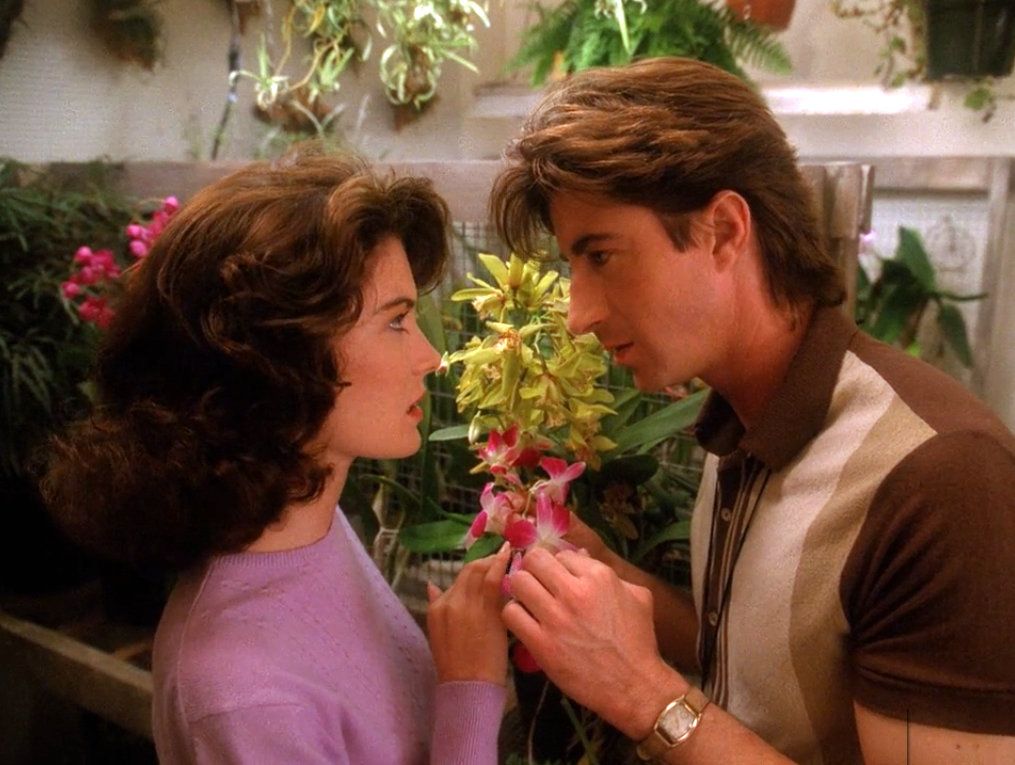
Yesterday I was watching the episode of Twin Peaks where Donna meets a young man who never leaves his home. He also grows orchids. Admittedly, I was partly intrigued by that because he never has to go outside, but that wasn’t the only thing.

Eccentric people know more about themselves than the rest of us do. If we stayed home all day, do we know what we would do? I doubt most of us would do anything useful like grow orchids. I would finish watching Twin Peaks.

It takes so much courage to fly in the face of convention and live exactly in the way your individual personality needs. We grow up believing there is one set path in life. It has a few variations, but essentially, they’re all the same. We go to college, get a job, get married, and have children. Why do we all do the same thing, expecting it to make all of us happy, when we are so different from each other?

It’s not even designed to make the majority happy. Only 13% of people are happy with their jobs (and I suspect this is because they have different jobs from the rest of us) and almost half of all marriages end in divorce. It’s almost like this formula was never intended to give us a good life.

There is not one person in the world who is not in some way eccentric, but there are many who do not honor it. What would happen if we truly got to know ourselves? Maybe this is why we are all so lost. We keep searching for happiness without even knowing what we’re looking for.

It starts with the small things. Eccentricity is really just gracious living, but tailored to the individual. Maybe it’s just the courage to repeat what you enjoy everyday with almost neurotic consistency. If we like one type of clothing, why do we ever have to wear anything else? If we are naturally quiet, why do we need to make ourselves talk? Why do we sleep in beds when we could sleep in hammocks?

We’re so disconnected from our personalities that we don’t even know what we would do with this freedom if we gave it to ourselves. My homework assignment for myself this weekend is figuring it out. I think it starts with buying one of these:

HUSH-pod-1
Hush Pod


How Sitcoms Ruined My Life

October 10th is mental health awareness day, and I was going to post something about my mental health, but then I relapsed in almost every way and fantasized about dying. So I thought a more appropriate topic would be What’s Depressing Me Today.

The answer is sitcoms. Romantic comedies have a bad reputation for ruining women’s expectations of love but this is undeserved. Why would I want someone to pretend to love me on a bet or to stalk me and insist on marrying me despite the fact that I WILL NEVER BE ABLE TO REMEMBER HIM? Rom-coms lie to men, not women, by telling them they will be forgiven for stuff like this.

Most of us grew up with sitcoms, so the brainwashing began early. First, they told us, you will grow up to have a group of attractive friends who want to spend all their time with you. As a teenager you will go out with them all the time without mentioning it to your parents, which is fine, because you see them far more than your own family, which is somehow also fine. I’m still trying to figure out how I as an “adult” experience more parental supervision than a sitcom teen. Even when my parents are in another country.

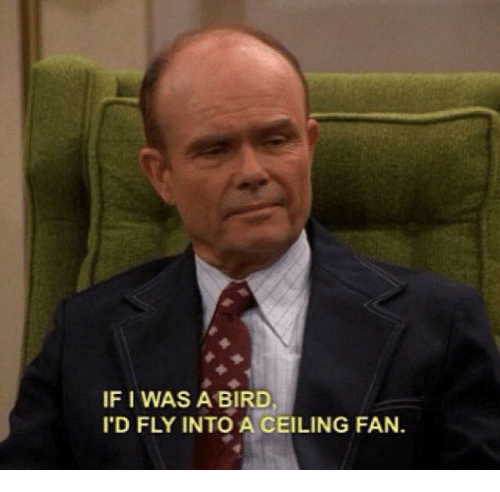
I also wonder where all of my friends are. To be fair, I also wonder this when I compare myself to other people in real life, not just TV shows. But I guess there’s a reason why no one wants to center a series around a grouchy introvert.

 if-i-was-a-bird-id-fly-into-a-ceiling-22411282

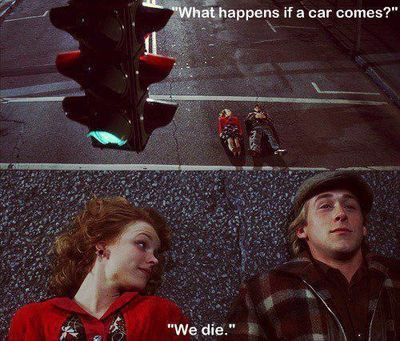
Sitcom love creates the biggest unrealistic expectations, though. Purely romantic movies tend to paint a very undesirable picture of love. I mean, does anyone really want a man who lies in the street to make up for not having an actual personality?

notebookmeme

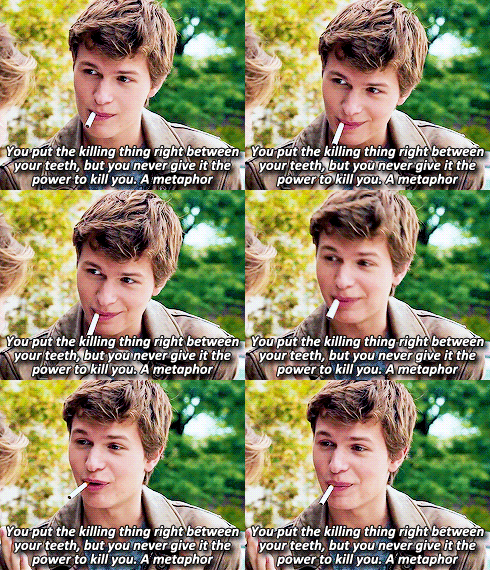
Or even better, a man who tries to live out literary concepts learned in elementary English class! That’s what gets the girls. 

ametaphor

I’m not saying these movies are terrible, but their weakness is always the banter that’s supposed to show two people falling in love. No one talks like this, and most people would not want someone who did. But this is what sitcoms get right. They’re less about exaggerating the love and more about the humor and friendship. So these relationships actually seem more realistic. But they aren’t for the following reasons:

Your partner is not going to be that funny.

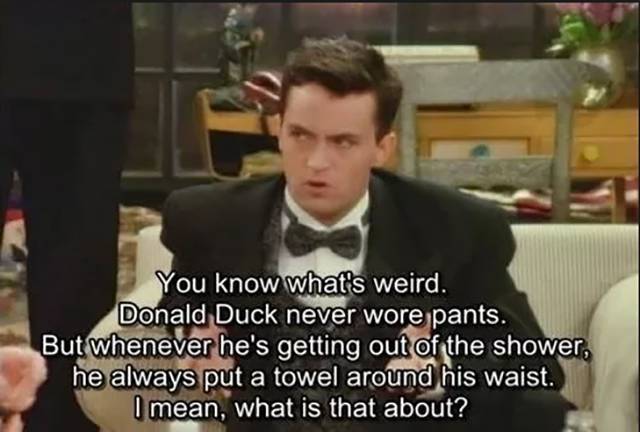
chandlerjoke

Your partner is also not going to remain your best friend for years after you break up and then get back together with you whenever it’s convenient later.

They’re not going to tolerate you dating all of their friends, either. The attractive friend group is not going to survive you dating everyone in it. Most friend groups don’t survive you dating even one of their members. It’s not about who gets the house in the divorce; it’s who gets the friends.

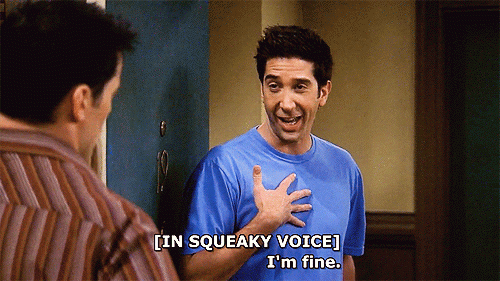
ross i'm fine

Also, it’s just not this easy to convince men they’re wrong.

ericformanstupid

Coming to the end of my favorite series saddens me because the illusion ends with it. These shows are the only place we find this image of companionship, and the episode format makes us feel like the characters are our friends. But I know it isn’t realistic. All you have to do is look at the lives of the actors who play these parts.

Topher Grace (Eric Forman), despite being incredibly talented, has never appeared in anything noteworthy again and was rumored to not have gotten along with his colleagues. Lisa Robin Kelly (Laurie Forman) died of a drug overdose at age 43 and Matthew Perry’s struggles with drugs and alcohol are well-documented.

Danny Masterson (Stephen Hyde) has been accused of rape by five different women, and as much as I would like not to believe it, that many accusers can’t be a coincidence. Both him and Laura Prepon (Donna Pinciotti) are scientologists, something I can find no rational explanation for. Yes, Ashton Kutcher and Mila Kunis got married, but for some reason I like them much better as a TV couple. But I’m aware that this is probably due to a flaw in my own judgment.

damnjackie

Mila, unlike me, is probably glad Ashton is not like this in real life.

It saddens me too that beautiful women like Courteney Cox and Mila Kunis thought they weren’t good enough and needed to change their appearance, when both, in my opinion, looked much better before. If the girl in the TV show constantly told she’s beautiful isn’t happy with how she looks, how are the rest of us supposed to feel?

All you have to do is look up the actors on Friends or That 70s Show to see stories about how one didn’t invite the others to their wedding or didn’t tell them they were engaged. They haven’t even been able to get the cast of Friends reunited for an interview. And the shows themselves had to end, because how long can the period of life last where you hang out constantly in your parents’ basement or your best friend’s apartment? Not very long—if you’re lucky enough to have it at all.

So excuse me if I cry over sitcoms, but I think I have a good reason.

A Long Rant About “13 Reasons Why”

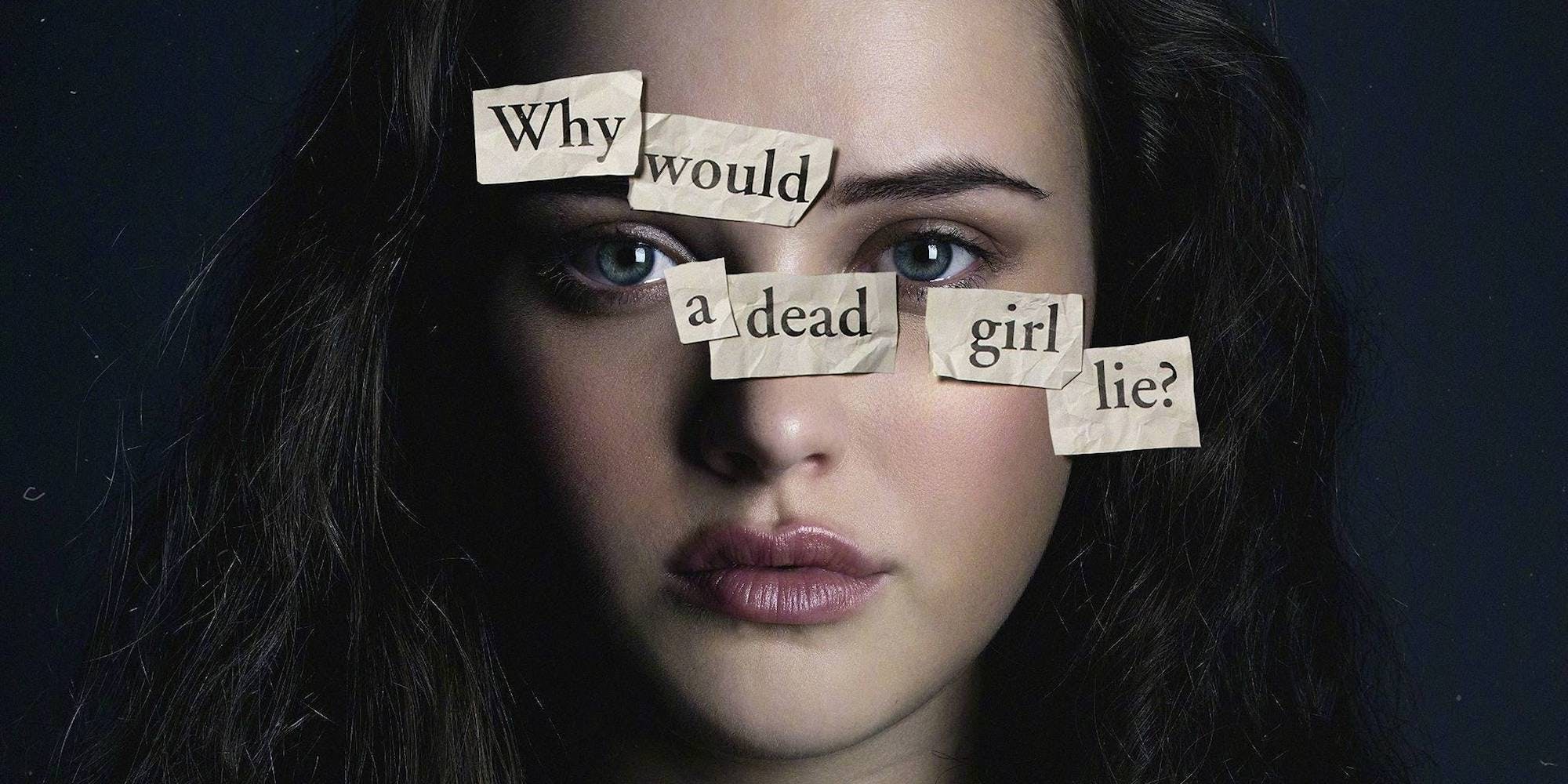
13-Reasons-Why-Hannah-Baker-Poster

*Mild Spoilers Ahead*

I still don’t know if I would say I liked “13 Reasons Why.” How can you “like” graphic depictions of sexual assault and suicide? It seems like the wrong word.

It’s definitely thought-provoking and well done. You know a show is complex when it creates conflicting opinions within one viewer. On one hand, I think people who believe the show should be banned are overreacting and unable to appreciate art, but on the other, I agree it is triggering. After watching the second season, I realized the show makes me want to kill myself.

To clarify, I am not suicidal nor have I ever been suicidal, and although I do own the same shoe box Hannah puts her tapes in, that’s just because I dress like I’m still in high school. I don’t think watching the show puts me at a risk of self-harm. But I also don’t think my feelings are the result of some flaw in my psyche rather than the content of the show. I feel this way when I watch “13 Reasons Why” because it treats victims of suicide (and trauma, to a lesser degree) like they are far more important than everyone else. Hannah Baker is mourned for two seasons by people who blame themselves completely for her suicide.

None of them seems to consider that maybe the tapes are vengeful and the product of an unstable mind. The message sent to the audience is that the revenge would work. All you have to do is kill yourself, posthumously blame it on others, and watch regret and remorse flood from your tormentors from a nice cozy seat in the afterlife.

It’s not an accident that viewers might find themselves wanting to be like Hannah Baker, or to get the attention she does. But imagine if Katherine Langford weren’t so gorgeous. What if the main character was an unattractive, weird teenage boy? I don’t think they could create a series about everyone being obsessed with Tyler if he committed suicide. I’d like to see if they could do it about any kind of boy. In a sense, Hannah Baker becomes a fantasy after she dies, a kind of myth. It’s a kind of objectification. Despite trying to break down barriers and create awareness, the show still perpetuates the dangerous idea that the only people worth caring about are beautiful. And that women get power and significance by being sexual objects.

Although the show is touted as raising awareness for mental illness, in my opinion, it does a better job highlighting the effects of bullying and trauma. Why does Hannah kill herself? Presumably because of everyone around her. But if it’s really their fault, why is Hannah considered mentally ill? If everyone else is to blame for her suicide, she must have made a rational decision. I mean, suicide can be rational. It’s not like everyone who kills themselves does it for the same reason. Hitler could have made tapes if he wanted to. I guess ISIS members actually do sometimes.

But mental illness is not logical or rational. Otherwise it wouldn’t be an illness. Trauma can trigger mental issues, but being devastated over someone’s death, for example, doesn’t mean you’re mentally ill. It’s just when the negative feelings go past what is a normal reaction that you may have a problem. So portraying Hannah’s death as the consequence of her treatment by others suggests she’s fine; she’s just been unbearably tortured by a bunch of high school students.

But Hannah is clearly mentally ill. Some viewers have theorized that Hannah has borderline personality disorder. If the show is really about mental illness, why are viewers the ones providing the actual psychoanalysis of what’s going on? I bet there are a lot of people who’ve never heard of BPD, and here where the show could have educated us about it, we get nothing. Instead we are looking at the events depicted through the lens of Hannah’s mental problems, and nobody ever seems to object.

They should object, over and over. Instead the only question they ask is if Hannah is telling the truth. So if she is, they’re all murderers? Why don’t they question that part? The tapes are essentially public humiliation, which surely falls into the category of the bullying that they are speaking out against. And everyone who receives the tapes before Jessica finds out she was raped before she even knows herself. Why does no one acknowledge what a terrible thing that is to do to someone? But somehow Hannah’s mistakes are just not as important as everyone else’s.

And this, I think, is why the show has a triggering effect. It reinforces negative, toxic thought patterns and deems them valid. The show is brilliant because it portrays life accurately enough so that we can see the truth despite what viewpoint is pushed on us, but for all the people who can’t see that because what is represented is how they think, it tells them that they are right.

Glamorizing mental illness is not educational because mental illness is not glamorous, poetic, or special. It’s an illness. It messes you up. It can make you unpleasant to be around and irrational. It can make you not shower for weeks and hurt the ones you love. It can make you victimize others. I’m only mild neurotic but I have to deal bald spots in my hair and eyebrows because I pull out my hair when stressed, and believe me, it isn’t fun. (But in the world of “13 Reasons Why,” someone can shoot themselves in the head and look better than they did a season ago.) Yes, many people with mental illnesses are misunderstood, and of course we should sympathize, but maybe the reason we don’t understand is because what’s going on isn’t normal and healthy.

I know there’s still a stigma around mental illness and I’m not saying we should go back to thinking of suffers as dangerous lunatics. But if we really want people to understand what mental problems are like, portraying them as “pretty” is just as misleading. Sure, some mentally ill people are beautiful, brilliant artists. But some abuse their children. And some are just morons.

In the end, I guess what bothers me about the show is the idea that Hannah couldn’t have done anything to save herself, and so it was fair that she destroyed everyone else. At the root of it, she was a damsel in distress, and Clay was the knight in shining armor who failed her. That’s not progressive, and it’s not realistic. No one is going to save you, and they wouldn’t be able to if they tried. And while we should always be kind to others and remember that we don’t know the demons they are dealing with, what we shouldn’t do, and what we shouldn’t encourage, is the idea that you are the reason another person refuses to help themselves.