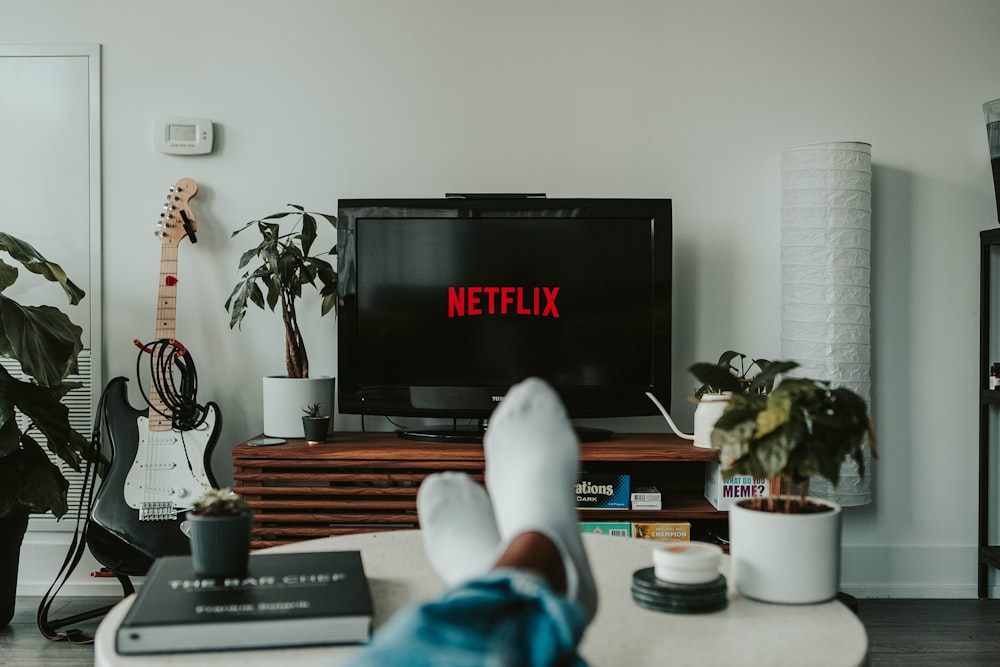
Ever since childhood, I’ve had a wide variety of interests. Skimming through the books in my old room takes me back to some of the phases I went through: Origami Magic, HTML in a Week, How to Win Friends and Influence People, The Complete Idiot’s Guide to Ballroom Dancing, Ballet for Dummies. On an unrelated note, I may have also had low self-esteem.
Most of these interests did not go anywhere. I revisited Origami Magic recently, thinking it might be easier for me now than it was in first grade, only to find I had actually regressed. I still haven’t learned to spin wool even though I bought a spindle in 2016, and as you might have guessed, very few people learn how to dance from books. My career as a pianist lost steam around the time I saw a four-year-old Chinese boy play the hardest song I knew better than me. I thought recently about what I had actually stuck with long-term, and a common theme emerged. I have become really good at hobbies that can be done while watching TV.
The TV, our most devoted quarantine friend, has been the subject of considerable criticism. It’s been accused of wasting our time, ruining our morals, and turning our children into idiots. I once had a parent claim it was why her son hit me and chased me with a pair of scissors. “Too much television,” she sighed. (I had a slightly different theory.)
Maybe we are just looking at it too negatively. The TV is a valuable tool–if we just understand how to use it properly. It actually benefits us in many ways.
It immobilizes people, for one thing. Especially children. Anything that keeps a child still, in one place, without warranting a call to Child Services, can’t be all bad. But even adults benefit from sitting. I Love Lucy was so popular in the 1950s that the crime rate in New York went down when it was on the air. Mobile adults go to war, take advantage of the working class, and accidentally impregnate each other. If more time were spent Netflixing than chilling, the world would be a considerably less sinful place. Studies show that couples with TVs in their bedrooms get less action. And less action is exactly what God wants you to have.
On a serious note, you actually will amp up your productivity if you can combine repetitive activities with television. If you want to learn something new, consider knitting or crocheting just because of how TV-friendly they are. Know thyself, and therefore aim low. Use TV to motivate you to exercise, attempt a tedious recipe (like stuffed grape leaves), or do housework. Get creative with finding ways to do your usual activities from the sofa. Watching TV from exciting new positions is a great way to start doing yoga. Is your favorite show just as good upside down? Let’s find out!
It may be sad that we find it so difficult to focus on one thing at a time these days, but does feeling bad about that somehow improve your attention span? No. So accept it and use it to your advantage. Sometimes the way to accomplish more is to numb out your brain.
TV quiets your mind, or kills it, as my mother would say. But that’s not all bad. There is an old joke that says the only reason you believe your brain is the most important organ in your body is because your brain is telling you that. The truth is, your brain is overrated. Even my brain is overrated. How many problems do we create for ourselves by worrying, ruminating, or coming up with excuses? All of these things are functions of the brain. Sometimes the answer is to think less.
Television gives you that. It gives you temporary reprieve from the agonies of your mind. And it isn’t simply a distraction, a way to deny reality until you finally turn it off. Stories help us cope with the hardships in our lives, no matter what form they come in. They give our struggles meaning and teach us to believe in happy endings. When times are really bad, we need the most easily accessible types of stories to comfort us. You might not feel like reading Dickens or Tolstoy when you get divorced or find out your parents never wanted you to be born. But you will turn on the TV.
Most sitcoms deal with topics that are very serious, but we laugh about them. This is their magic. If the characters we love can laugh through a tragedy, it tells us that maybe we can too.
At the end of the day, I even believe TV can motivate people to succeed. At some point, after spending hours watching other people do stuff, you’re going to want to do something of your own. Project Runway makes me sew more, cooking shows make me cook and consequently eat more, which is precisely why I don’t watch them. You will want to do what you see. One of the reasons we watch TV is because it is aspirational. It shows us who we could be, in another life with good lighting and makeup men. If you are confused about who you are, look at what you like to watch. Look at the characters you love. What speaks to you and makes you keep watching long after your backside gets sore and your eyes burn? Don’t, however, take it too literally. Liking Breaking Bad does not mean your destiny lies in drugs. But it could mean you desire more adventure in your life. I’ve always gravitated towards heartwarming comedies because adventure and action are exactly what I don’t want. I want security and positive relationships. And, after I watch The X Factor, to be wildly famous.
In a nutshell, how can you discover your life purpose, finally start working out, and conquer the intrusive thoughts in your head about how you’re a stain on the reputation of your family? It’s easier than you think. Just watch more television.






 Half-Blood Kuwaiti