All I Want for Christmas is a Return to the Womb

person touching stomach
Alicia Petresc on Unsplash

Who wouldn’t, amirite? I realized recently it’s the only place I’ve never cried.

Since becoming an aunt, I’ve done a little bit of research on the kinds of things that calm down babies. Apparently swaddling makes them feel more secure because it makes them feel like they did in utero, and they liked being rocked because it mimics what happens to the fetus when the mother moves. My sister also told me how she uses a white noise machine to help her son sleep for the same reason—apparently it’s not so quiet in someone else’s body. It’s not really quiet out here either, but that’s mostly because of my sister’s son.

These young things, only in the world for a short time, already want to make their way back. I certainly can’t blame them. Do we really get over this? As someone who falls asleep frequently in cars (as long as my mother isn’t driving, ironically), I looked it up once and found that this is common and again, probably because it mimics the movement you experienced as a fetus.

Why aren’t people doing more with this? I feel like learning to sleep through the night and being discouraged from sobbing when uncomfortable has conned us all into a very unwomblike adulthood. I admired a swinging bed my sister got for her children and she remarked that the oldest would never sleep in it. He would cry as soon as he was put down. Talk about unappreciative. I would love a swinging bed, but they don’t make them in my size. (They should also start making regular swings I can sit in comfortably, but my theory about how adult gyms should resemble playgrounds is a rant for another day.) I’m also willing to settle for a cradle, even if no one rocks it back and forth for me. But it doesn’t matter—rocking beds are rare, very expensive, and don’t ship to Kuwait. And frankly, I’m scared to do too much googling on anything involving the words “adult” and “baby.” If you don’t know what I mean, count your blessings.

I’m going to have to settle for a weighted blanket, and I don’t mind that, but I think the uterus-inspired bed is a tragically unexplored sleep option. It is based on a fundamental psychological truth most millennials already know—we wish we’d never been born. I read some kind of quasi-inspirational quote once about how a baby crying as soon as it’s born is a sign of life and feeling pain means you’re alive, etc. but like, maybe babies start out crying because they’ve just left the most comfortable place they’ll ever know. Always the right amount of food you never have to ask for, a bed perfectly molded to the shape of your body, and it’s never too hot or too cold. People talk to you, but no one expects you to answer. For the last time ever, everyone gets happy and excited when you kick your mother.

Another bit of poetry I saw a while ago went something like, “I am looking for a home I’ve never been to.” I disagree. You’ve been there, and you just don’t remember it, because it was a uterus.

Why People Need to Stop Using “Culture” to Justify Abuse

This is a topic that makes me angry, because I know so many people who believe that they own their children and it’s perfectly okay to treat them however they want.

They won’t admit that’s what they think, but it’s obvious. Why else would it be so common that people are pressured into marrying their cousins or denied the option to marry someone they love because of nationality or family name? Why are children forced to wear hijab and beaten if they date or smoke? Why is it acceptable that some children aren’t allowed to access the internet? I know this isn’t everyone’s parents, but it’s common enough to be a disturbing trend. And some people never find out how violently their parents would try to control them because they never rebel enough to see.

And then there are parents who justify their abusive but not “that bad” actions by saying, “A typical Kuwaiti father would have beaten you up and stopped you from doing x, y, or z. You’re so lucky I didn’t do that.”

This tells me everything I need to know, because it suggests that a person cannot be doing something wrong if it is common in society. And that we have no right to ask for more than what is typical, no matter how limiting, abusive, and unfulfilling that typical is.

In other countries, your children can be taken away from you if you hurt them. Here we say, “What did she expect her family to do if they caught her with a boy?” Even people who claim to be against violence will defend the parents’ point of view if the offense is serious enough.

But the fact that this is normal in our society doesn’t make it better. It makes it worse. Abuse isn’t abuse because it’s rare; it’s abuse because of the effect it has on the child. That doesn’t change based on what country they’re in. A punch or a slap is going to feel the same no matter what the nationality is of the person receiving it, only they’re going to receive much less support and understanding in a culture that normalizes it. But the negative effects of corporal punishment on children don’t go away because you’re comfortable dismissing the scientific research that shows them. It just means you live in a place where the rejection of knowledge to preserve prejudice and tradition has been normalized—and that should frighten you.

Because the cultural acceptance of physical and emotional abuse makes a child less likely to identify it as such, they are not going to see the problem with repeating it themselves. If we could at least give it the proper name, we would know that what had been done to us was not normal or okay.

Many people struggle to actually term something abuse because they love their abuser. They think that abuse is only something a monster would do, and that isn’t their father/mother/brother/husband/wife. It can’t be a person considered normal in a given culture. But the issue is not black and white. You don’t have to be a terrible person in every way to abuse the people you love. You can have an abusive episode once or twice in your life and still generally be a good person. Abusers can be motivated by love, actually, or at least their version of it. Sometimes it doesn’t mean you’re evil, just very ignorant.

Parents never want to admit they’re bad parents. They can’t. It’s something too highly valued by the entire world for anyone to openly say, “I’m a bad parent,” and have that met with acceptance. Failing as a parent is the worst failure in the eyes of many, and that should make it especially important to do your very best. But too often all that happens is that people refuse to admit they have made terrible mistakes. Their child can lash out at them and even try to hurt themselves, but the parent will never realize it had something to do with them. They will blame anyone else before they look in the mirror because they can’t face the possibility that they failed as a parent.

When you’re surrounded by other abusive parents telling you you did the right thing, it just gives you permission to continue burying your head in the sand and ignore the damage you’ve done to your children. It’s almost like we look at our society as an example of the effects of perfect child-rearing. Why would we need to change? But Kuwait has a serious drug problem, struggles with mental illness, and one of the highest divorce rates in the world. We are doing something wrong.

We deny our children basic human rights even when they reach adulthood—we never accept that they are their own people and not first and foremost our children. Even when we have our legal rights, social and familial pressure keeps us from exercising them in full. We are asked to sacrifice our own happiness by the people who say they love us the most, not because it will actually benefit them, but because they believe they we should do what they say above all.

The message sent is that we do not deserve to be happy. We are denied things considered normal in most of the world but for some reason we are expected to do without them and not ask for more. We can’t imagine a future where this isn’t the case. Most people are allowed to marry who they love, to travel, to choose their religion, to choose their clothing, and most importantly, to make mistakes as children and teenagers without being hurt (or considered unmarry-able) . These things are not considered privileges. There are abusive parents everywhere, always, but at least this is the general expectation. What, then, is being done by parents who were never even held to this standard?

Maybe you read that list and felt uncomfortable imagining a Kuwait that is so different from the way it is now, or you interpreted it as a breakdown of religion. But that is a list of rights. Rights are what a person needs to live freely and happily; you cannot take them away and have a healthy society. Maybe this is why we care so much about reputation in Kuwait, because we cannot be happy within the framework of rules given to us, so the best we can do is pretend. Revealing our suffering is a rebellion, because we aren’t allowed to say, “This isn’t working.” Maybe we are scared of the shame that comes with failing, as if there is something bad about us that prevented us from living a good life within the bounds of good Kuwaiti moral values.

Instead of being understood, we told by Kuwaitis and Westerners alike that our culture, the very thing perpetuating our abuse, is the reason why our suffering should be invalidated and ignored. But we are still suffering, whether we are told we ought to or not.

Is Depressed the New Normal?

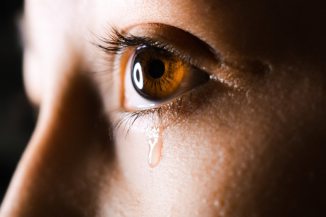
teardropeye.jpeg

I know everyone likes to believe that the newest generation is worse than all the previous ones, or that the world is in constant decline or possibly about to end. Complaining about “people these days” is the least original complaint in history–even though most statistics show that it isn’t based on fact. When it comes to vaccinations, health, and poverty, life is actually getting much better.

But—and it’s a very important but—this does not hold true for mental illness. We may have better treatment methods, but cases of anxiety and depression have been steadily on the rise since the 1930s. Suicide rates are down, but this is most probably because of the invention of antidepressants, not because fewer people are suffering in the first place. Seventy years ago we did not have the epidemics of eating disorders and self-harm that we do now, and that isn’t nostalgia speaking–it’s simply the truth.

Why is this so? My belief is that modern life is in conflict with our physiology, destining us for emotional issues. We were not made for the way we live. And so, our mental health is paying the price. Think about this: Two natural ways to fight depression are through exercise, because it releases endorphins, or through sun exposure, because vitamin D deficiency is a cause of depression. But how many of us work in jobs that require us to be physically active? How many of us spend significant time outdoors each day? As the world changes, it pushes us more and more inside buildings and into artificial light. This is not how we were meant to live.

In addition, modern life encourages us to be sedentary consumers, not because it’s best for us but because businesses profit when we do less of what fulfills us and spend money instead. Look at the messages you’re bombarded with on a daily basis. What do advertisements suggest you do to become happy? Yes, you can ignore advertisements–most of us don’t buy everything advertised to us. But marketing works on the principle that you need to feel there is something lacking in your life that the product can fix. In other words, we face an onslaught of images and messages designed to make us feel like we aren’t good enough whenever we turn on the TV, look at our iPhone, or even go outside. We don’t have to buy something for that idea to be internalized.

But the biggest change in the last century that contributes to increased mental health problems has got to be school. School has changed, and there are interesting historical reasons why. In the first half of the 20th century, homework was frowned upon and given rarely–until the Space Race and the Cold War. The American desire to compete with the Russians manifested in a more rigorous education system. From then on, the more challenging, the better, we said. Now, standardized testing cripples students with a fear of failure.

But all of this pressure is artificial. Is there anything inherent in learning that specifies we should be dealing with constant anxiety? It isn’t like we are learning to become soldiers or warriors. There is absolutely no reason why reading a book and reflecting on it should make you nervous. We learn in our everyday lives, and it doesn’t fill us with panic. Imagine someone trying to make a new recipe or play a new video game having an anxiety attack when they made a mistake. We would think this was highly abnormal. But we accept it in an academic culture–students cry over tests, have panic attacks in the bathroom, and we aren’t even surprised. If anything, the calm student is the exception, and their peers look at them with wonder but also think they ought to care more. We have accepted that school should trigger your fight-or-flight danger response even though there is no real danger.

This soul-crushing system has been put in place because we want an easy way to figure out if someone is good enough to be in our college or our company. It’s too difficult to figure out someone’s skills on our own; we need numbers and data we can analyze quickly. It makes sense to some extent, but we have taken it to the extreme. And this increases the pressure placed on us: as more people have degrees, the less meaning they have in the world, and the more we are expected to be able to do in addition to having succeeded academically. The world needs creative people right now, people with talents, and school doesn’t teach you to be talented. Schools are not designed to optimize individual student learning. They are designed to optimize financial resources and put numbers on qualities that can’t be defined in numbers.

And yet we call the reaction to this mental illness. “It is no measure of health to be well adjusted to a profoundly sick society,” said Jiddu Krishnamurti. And I agree. Life has always been hard, but we have made it unnecessarily difficult in a way we are not naturally equipped to deal with. People complain that the uptick in mental illness is due to over-diagnosis of normal human emotions. I agree and disagree, because these emotions are normal reactions, but they shouldn’t be existing to this extent. But how else are we supposed to react in an environment that harms and sickens us? The problem is that we are considered the problem, that we treat the sufferers instead of addressing what they are suffering from.

Are you and I sick? This is what I’ve been told. But I disagree: If I am ill, it is only because I live in a diseased world. It is only because everything around us is fighting to make us ill, and no one is trying to stop it.

Sensitivity is Not Weakness

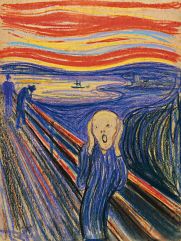
scream

“Keep a stiff upper lip,” people like to say, or, “Make them wonder how you’re still smiling.”  No matter what life does to you, you should get back up on your feet and face it all. Don’t you know that if you react properly under intense pressure, you might just turn into a diamond?

On one hand we are told that life is short and we should not spend it being miserable, that anyone or anything that makes us unhappy should be cut out of our lives. On the other, we hear about how our greatest strength is enduring hardship.

I don’t buy into this idea that putting up with stress and tragedy, letting it affect you as little as possible, is somehow superior. Some people do praise the courage that is required for vulnerability, and others say that “only the gentle are ever truly strong,” but none of these express the real value of sensitivity.

I used to think I was not a sensitive person, which was odd considering the emo journals I have from this time period (and all of my life), but the day a ouija board made me cry was the day I gave up that delusion.

I’ve wondered many times how other people manage what would be unbearable for me, but I also wonder if they have given up on happiness. The greatest advantage to sensitivity, I have found, is that it drives you to improve your life. I can’t handle what many people accept, and the result is that I’m forced to stand up for myself even though I naturally hate to.

When you feel deeply, you reach the limit of emotional pain that you can put up with sooner than others, and so you react sooner. When you experience your feelings viscerally, you can’t ignore them. When you can’t function until you’ve worked through your emotions—you work through them. It’s impossible for a highly sensitive person to accept a lifetime of stress and unhappiness, because these feelings will always be at the forefront of their consciousness. And this is why sensitivity is a strength: it is the force that propels you to improve your life when many people would simply stand still.

You may suffer more, but you will also be more responsive to joy. If a part of your body loses the ability to feel it will not be considered stronger than your other limbs but much weaker. After all, your body should know when to move away from a source of pain. And this is what sensitivity is. It protects us by pushing us away from what hurts us because it is harder to stay than to leave. The downside to this is that sometimes, if you’re like me, you may end up hiding in the bathroom when you’re uncomfortable (or under a desk), but that’s only temporary until you create a place for yourself that you don’t need to run away from.

What is sensitivity, really, except the expectation that we should be treated well? Hurtful actions are only those we do not accept as normal. And the belief that we deserve a good life, with people who love us well, is not a shortcoming. It is the very least we need to pursue our dreams, and we should not be apologizing for it.

A Long Rant About “13 Reasons Why”

13-Reasons-Why-Hannah-Baker-Poster

*Mild Spoilers Ahead*

I still don’t know if I would say I liked “13 Reasons Why.” How can you “like” graphic depictions of sexual assault and suicide? It seems like the wrong word.

It’s definitely thought-provoking and well done. You know a show is complex when it creates conflicting opinions within one viewer. On one hand, I think people who believe the show should be banned are overreacting and unable to appreciate art, but on the other, I agree it is triggering. After watching the second season, I realized the show makes me want to kill myself.

To clarify, I am not suicidal nor have I ever been suicidal, and although I do own the same shoe box Hannah puts her tapes in, that’s just because I dress like I’m still in high school. I don’t think watching the show puts me at a risk of self-harm. But I also don’t think my feelings are the result of some flaw in my psyche rather than the content of the show. I feel this way when I watch “13 Reasons Why” because it treats victims of suicide (and trauma, to a lesser degree) like they are far more important than everyone else. Hannah Baker is mourned for two seasons by people who blame themselves completely for her suicide.

None of them seems to consider that maybe the tapes are vengeful and the product of an unstable mind. The message sent to the audience is that the revenge would work. All you have to do is kill yourself, posthumously blame it on others, and watch regret and remorse flood from your tormentors from a nice cozy seat in the afterlife.

It’s not an accident that viewers might find themselves wanting to be like Hannah Baker, or to get the attention she does. But imagine if Katherine Langford weren’t so gorgeous. What if the main character was an unattractive, weird teenage boy? I don’t think they could create a series about everyone being obsessed with Tyler if he committed suicide. I’d like to see if they could do it about any kind of boy. In a sense, Hannah Baker becomes a fantasy after she dies, a kind of myth. It’s a kind of objectification. Despite trying to break down barriers and create awareness, the show still perpetuates the dangerous idea that the only people worth caring about are beautiful. And that women get power and significance by being sexual objects.

Although the show is touted as raising awareness for mental illness, in my opinion, it does a better job highlighting the effects of bullying and trauma. Why does Hannah kill herself? Presumably because of everyone around her. But if it’s really their fault, why is Hannah considered mentally ill? If everyone else is to blame for her suicide, she must have made a rational decision. I mean, suicide can be rational. It’s not like everyone who kills themselves does it for the same reason. Hitler could have made tapes if he wanted to. I guess ISIS members actually do sometimes.

But mental illness is not logical or rational. Otherwise it wouldn’t be an illness. Trauma can trigger mental issues, but being devastated over someone’s death, for example, doesn’t mean you’re mentally ill. It’s just when the negative feelings go past what is a normal reaction that you may have a problem. So portraying Hannah’s death as the consequence of her treatment by others suggests she’s fine; she’s just been unbearably tortured by a bunch of high school students.

But Hannah is clearly mentally ill. Some viewers have theorized that Hannah has borderline personality disorder. If the show is really about mental illness, why are viewers the ones providing the actual psychoanalysis of what’s going on? I bet there are a lot of people who’ve never heard of BPD, and here where the show could have educated us about it, we get nothing. Instead we are looking at the events depicted through the lens of Hannah’s mental problems, and nobody ever seems to object.

They should object, over and over. Instead the only question they ask is if Hannah is telling the truth. So if she is, they’re all murderers? Why don’t they question that part? The tapes are essentially public humiliation, which surely falls into the category of the bullying that they are speaking out against. And everyone who receives the tapes before Jessica finds out she was raped before she even knows herself. Why does no one acknowledge what a terrible thing that is to do to someone? But somehow Hannah’s mistakes are just not as important as everyone else’s.

And this, I think, is why the show has a triggering effect. It reinforces negative, toxic thought patterns and deems them valid. The show is brilliant because it portrays life accurately enough so that we can see the truth despite what viewpoint is pushed on us, but for all the people who can’t see that because what is represented is how they think, it tells them that they are right.

Glamorizing mental illness is not educational because mental illness is not glamorous, poetic, or special. It’s an illness. It messes you up. It can make you unpleasant to be around and irrational. It can make you not shower for weeks and hurt the ones you love. It can make you victimize others. I’m only mild neurotic but I have to deal bald spots in my hair and eyebrows because I pull out my hair when stressed, and believe me, it isn’t fun. (But in the world of “13 Reasons Why,” someone can shoot themselves in the head and look better than they did a season ago.) Yes, many people with mental illnesses are misunderstood, and of course we should sympathize, but maybe the reason we don’t understand is because what’s going on isn’t normal and healthy.

I know there’s still a stigma around mental illness and I’m not saying we should go back to thinking of suffers as dangerous lunatics. But if we really want people to understand what mental problems are like, portraying them as “pretty” is just as misleading. Sure, some mentally ill people are beautiful, brilliant artists. But some abuse their children. And some are just morons.

In the end, I guess what bothers me about the show is the idea that Hannah couldn’t have done anything to save herself, and so it was fair that she destroyed everyone else. At the root of it, she was a damsel in distress, and Clay was the knight in shining armor who failed her. That’s not progressive, and it’s not realistic. No one is going to save you, and they wouldn’t be able to if they tried. And while we should always be kind to others and remember that we don’t know the demons they are dealing with, what we shouldn’t do, and what we shouldn’t encourage, is the idea that you are the reason another person refuses to help themselves.