All I Want for Christmas is a Return to the Womb

person touching stomach
Alicia Petresc on Unsplash

Who wouldn’t, amirite? I realized recently it’s the only place I’ve never cried.

Since becoming an aunt, I’ve done a little bit of research on the kinds of things that calm down babies. Apparently swaddling makes them feel more secure because it makes them feel like they did in utero, and they liked being rocked because it mimics what happens to the fetus when the mother moves. My sister also told me how she uses a white noise machine to help her son sleep for the same reason—apparently it’s not so quiet in someone else’s body. It’s not really quiet out here either, but that’s mostly because of my sister’s son.

These young things, only in the world for a short time, already want to make their way back. I certainly can’t blame them. Do we really get over this? As someone who falls asleep frequently in cars (as long as my mother isn’t driving, ironically), I looked it up once and found that this is common and again, probably because it mimics the movement you experienced as a fetus.

Why aren’t people doing more with this? I feel like learning to sleep through the night and being discouraged from sobbing when uncomfortable has conned us all into a very unwomblike adulthood. I admired a swinging bed my sister got for her children and she remarked that the oldest would never sleep in it. He would cry as soon as he was put down. Talk about unappreciative. I would love a swinging bed, but they don’t make them in my size. (They should also start making regular swings I can sit in comfortably, but my theory about how adult gyms should resemble playgrounds is a rant for another day.) I’m also willing to settle for a cradle, even if no one rocks it back and forth for me. But it doesn’t matter—rocking beds are rare, very expensive, and don’t ship to Kuwait. And frankly, I’m scared to do too much googling on anything involving the words “adult” and “baby.” If you don’t know what I mean, count your blessings.

I’m going to have to settle for a weighted blanket, and I don’t mind that, but I think the uterus-inspired bed is a tragically unexplored sleep option. It is based on a fundamental psychological truth most millennials already know—we wish we’d never been born. I read some kind of quasi-inspirational quote once about how a baby crying as soon as it’s born is a sign of life and feeling pain means you’re alive, etc. but like, maybe babies start out crying because they’ve just left the most comfortable place they’ll ever know. Always the right amount of food you never have to ask for, a bed perfectly molded to the shape of your body, and it’s never too hot or too cold. People talk to you, but no one expects you to answer. For the last time ever, everyone gets happy and excited when you kick your mother.

Another bit of poetry I saw a while ago went something like, “I am looking for a home I’ve never been to.” I disagree. You’ve been there, and you just don’t remember it, because it was a uterus.

Let’s Be a Little Less Honest

Image result for moron

A few days ago, for some reason or another, my friend and I decided to make a list of negative qualities our future husbands would have to put up with from us. I don’t know whose idea this was. I’m pretty sure it was mine; my friend thinks it was hers, and I’ve decided to let her believe that. Because it was a terrible idea.

I’m a big fan of lists usually. Shopping lists, goal lists, lists of ways to improve my life, lists of my faults, lists of my physical defects—I’ve made them all, usually several times. My favorite is making to-do lists and then accomplishing nothing on them.

But this was different. It lacked the usual joy I find in mutilating my self-esteem. It kept my friend awake at night. The list just grew and grew, starting with very obvious faults I have to things that could be good or bad, depending on your perspective. For example, I’ve been told I don’t care enough about how I look, and yet I know to some people I’m silly and vain and I care too much. So which is it? Let’s put down both!

I’ve been thinking about why this felt so bad, and in the end I’m glad I did it, because it made me realize a few things. First of all, people are not lists—people are not even qualities. Someone kind and nice may be nothing like another kind, nice person. And no one is always nice. A better way of figuring what someone is would be to ask, “When is this person unkind? And why?”

Do you know how complicated people are? I wonder if they can even be reduced to words. The best people cannot, so I wonder why we would strive to be that simplistic, to diminish ourselves. Self-improvement should mean becoming more, not erasing parts of yourself to be more easily described, to be simpler and less messy. My favorite people are the messy ones. How can anyone with depth bond with someone who refuses to ever be complicated? This is what people want. We want to be fascinated by someone, and for that to happen, we have to wonder about them. There has to be something beneath the surface to discover.

The other thing I realized is that you shouldn’t advertise whatever’s wrong with you. Yes, be self-aware, blah blah blah, but that quality is valuable when you need to admit you’re wrong. So tell people if that’s the case. But don’t pass out a list of all the ways you’ve been wrong all your life. Because they will believe you.

Actions only speak louder than words to people who take the time to look at them. Most don’t bother. If you believe you’re hard-working, smart, likable, beautiful, whatever, other people are more likely to believe it too. If you tell them you’re an awkward spaz, you’ll find shortly afterwards they’re teasing you for being an awkward spaz. And somehow that feels way less funny than it did when you were saying it.

Self-deprecating jokes backfire. If you tell people you’re an idiot, you’re going to start convincing them. After all, wouldn’t you know better than anyone else? It also works in reverse. Maybe I take people at face value more than others do, but I have at times been in the presence of women who either believe or desperately need to believe they are wildly attractive and sought after by most men. And they usually are pretty, just not extraordinary. And I leave thinking, if all these people treat you this way, there must be a good reason. Why doesn’t this happen to me? Are you that much better?

People lie, sometimes overtly, sometimes in little ways without even realizing it. They tell you they are who they wish they were, and we listen. Then there are other people, usually more honest people who aren’t so insecure that they can’t admit their flaws, who tell you what they are trying not to be. And then it becomes their epitaph, or at least their punchline.

Me being the moron that I am, I’m probably not going to stop saying negative things about myself. It’s a hard habit to break; there really is something addictive about it. But the next time someone doesn’t take me seriously, I will know that I might be the reason why.


Let’s Be Honest

Image result for honest

In the past few years, I’ve noticed that many people have a problem being honest with themselves. And I understand why that can be hard. The truth isn’t usually nice.

And that’s why you need to be honest with yourself before it’s too late. Otherwise you’ll just have too much baggage to unpack, and very few people are willing to flog themselves over decades of poor judgment or bad behavior. They prefer to take it out on everyone else  (I am one of their personal favorites).

This is not to be confused with being honest about other people. These two types of honesty have very little to do with each other, although they might be inversely related. To paraphrase a line of Agatha Christie’s, people who are brutally honest with others are usually delusional about themselves. They have to be. To criticize others harshly, you have to consider yourself qualified to judge them.

The great (haha) thing about being alone is that it teaches you about yourself. It’s unpleasant, but in the spirit being honest, I will share a few of my findings.

First of all, I need to stop stalking people. They’re beginning to notice.

Not really, that was a joke, but only because I have a few good friends who have forbidden me from my creeper ways. (I have some other good friends who recommend TV shows to me like Crazy Ex-Girlfriend and remark on its resemblance to my life. These friends are what you call enablers.) The problem is less that stalking creeps people out, but that it doesn’t creep some people out, and you should avoid these people. Which is really the opposite of stalking them.

Stalking has never gotten me anywhere worth going, especially when it comes to people my own age. When I was younger and I stalked people inappropriately older, it was a fun diversion that never lead to anything but moping over unrequited feelings. Alas, none of my teachers ever loved me back. They did, however, stop answering my emails. Even the college professor I once tried to woo, who was single and only a measly 8 years older than me, purposely did not say hello to me outside of class. I gave a long presentation in class to impress him, around twice the length it was supposed to be, and as a result he made signs saying “Five minutes left” and “Stop” that he used in subsequent lessons. As you may have surmised, we are not currently married.

If you stalk, pursue, chase or whatever someone and you get them, you’re always going to be in the position you started out in. And it’s not nice to continually reach for someone. It doesn’t pay off, and it should never be necessary in the first place. There are people in the world who will like you even if you don’t memorize their schedule and write it down in code on your binder. And you don’t want the sort of person who finds that kind of thing endearing anyway (although in my experience, no one does).

So I’m giving it up. No more stalking. At least not very much. It’s a little hard to stop completely when you have a related character flaw: joy in obsession. I like to obsess about people. I like to daydream about them, then listen to sad music and weep into a tissue. On a productive day, I may even write a poem. I used to think it meant something. This was my second epiphany: we (if you’re like me) look for people to play out the fantasies in our head with. The person is less important than the fantasy. Which is fine as long as you know it doesn’t mean anything. 

It’s very easy to forget that, and when I inevitably do, I will remind myself of the product of this soul-searching: not to act on anything I think or feel. I don’t think this is going to go well. If you’re here because I accidentally liked one of your photos from 5 years ago, I’m sorry.

I Finally Attend Kindergarten

Image result for kindergarten

I never went to kindergarten as a child. My mother believed that was just too young an age for me to be without her, so she homeschooled me instead and sent me off into the world when I was six. So logically, I quit my high-paying, perfectly acceptable job teaching high school for one in an educational setting I have zero experience in for a much lower salary. Did I mention that I’ve been scared of children ever since my cousin used to hit me as a toddler?

So far it’s actually been a great choice—children seem to like me, I’m no longer wistfully contemplating suicide, and it’s much more rewarding overall. There’s nothing like getting a hug from a four-year-old.

Or being punched in the stomach by one. One child I’ve had the privilege of dealing with announced on our first day together that he does not like teachers. He only likes mommy. The next day he decided he liked me and wanted to go home with me, only to dislike me again a little while later. It was weirdly reminiscent of my interactions with adult men.

Since then, he has alternately loved me and hated me depending on my willingness to let him do whatever he wants. I refused him a certain box of toys once, and as a result he kicked me, hit me, tried to bite me, threw something at my head, and chased me with a pair of scissors while saying, “I CUT YOU!”…Twice.

But for some reason I forget all of that when he runs up to me in the hall, says, “I like you,” and wraps his arms around my leg.

One thing I won’t forget, however, is the five-year-old who identified a picture of a dog as “a bitch”. I don’t know who taught him that and I don’t want to know, but nothing I ever heard in high school left me that speechless.

I hope this is one job I can stand without losing my sanity, which is worth the thinly veiled disappointment of my relatives. And somehow I think it might be, because there’s something really nice about hearing kids tell you that their mother is very fat and the teacher uses her phone when you aren’t in the room. It might even be worth getting sneezed on, drooled on, and physically assaulted. As long as no one pees on me, because that I am not okay with.

Every Flaw is Also a Virtue

Image result for self esteem

This is one of the easiest and most effective self esteem-building exercise I know. It’s based on this simple truth: flaws and virtues don’t exist separately; instead, they come in pairs. It makes sense. After all, aren’t some flaws are just too much of a good thing?

Not everyone has the same pairs, you’ll have to figure out what yours are yourself, but look at the following example:

You consider yourself lazy. Maybe you are. This is not to convince you that your flaw doesn’t actually exist and instead you are nothing but good traits. It’s just, if you’re lazy, you’re going to have a more positive expression of the same thing that makes you lazy. Maybe you’re laid-back or free spirited. Maybe you’d rather daydream than do something more productive, but doesn’t that mean you have a vivid imagination? Perhaps someone else is calling you lazy because you don’t do what they ask you to do. It’s a valid complaint. But maybe this also means you aren’t a follower, that you’re independent and you live your life exactly how you want.

It will not be the same pair for everyone because there are a million subtleties in personality. You will not be lazy for the same reason I will. Someone could accuse us of the same negative traits yet not consider us remotely similar. Here are some more examples of flaws and what virtues can accompany them to help you think:

Can’t focus — Creative, dreamy

Bossy — Natural leader

Overly sensitive — Caring

Too talkative — Friendly

Messy — Accepting, easygoing, or tolerant

Insecure — Has high standards or strongly wishes to make others happy

Arrogant — Willing to take risks or, sometimes, ambitious

Rude — Straightforward

Quick-tempered — Speaks mind

Hides emotions — Patience, self-control

You may know plenty of rude people who aren’t straightforward, just unpleasant, but I would believe they have something positive in them tied to whatever drives them to be rude. But I’m not asking you to look for it in other people. Just yourself. Take a piece of paper and write down whatever flaws you have that make you feel bad about yourself, then flip them on their heads and find your good qualities. This should remind you to never believe that you are without value, but also keep you humble.

Why People Need to Stop Using “Culture” to Justify Abuse

This is a topic that makes me angry, because I know so many people who believe that they own their children and it’s perfectly okay to treat them however they want.

They won’t admit that’s what they think, but it’s obvious. Why else would it be so common that people are pressured into marrying their cousins or denied the option to marry someone they love because of nationality or family name? Why are children forced to wear hijab and beaten if they date or smoke? Why is it acceptable that some children aren’t allowed to access the internet? I know this isn’t everyone’s parents, but it’s common enough to be a disturbing trend. And some people never find out how violently their parents would try to control them because they never rebel enough to see.

And then there are parents who justify their abusive but not “that bad” actions by saying, “A typical Kuwaiti father would have beaten you up and stopped you from doing x, y, or z. You’re so lucky I didn’t do that.”

This tells me everything I need to know, because it suggests that a person cannot be doing something wrong if it is common in society. And that we have no right to ask for more than what is typical, no matter how limiting, abusive, and unfulfilling that typical is.

In other countries, your children can be taken away from you if you hurt them. Here we say, “What did she expect her family to do if they caught her with a boy?” Even people who claim to be against violence will defend the parents’ point of view if the offense is serious enough.

But the fact that this is normal in our society doesn’t make it better. It makes it worse. Abuse isn’t abuse because it’s rare; it’s abuse because of the effect it has on the child. That doesn’t change based on what country they’re in. A punch or a slap is going to feel the same no matter what the nationality is of the person receiving it, only they’re going to receive much less support and understanding in a culture that normalizes it. But the negative effects of corporal punishment on children don’t go away because you’re comfortable dismissing the scientific research that shows them. It just means you live in a place where the rejection of knowledge to preserve prejudice and tradition has been normalized—and that should frighten you.

Because the cultural acceptance of physical and emotional abuse makes a child less likely to identify it as such, they are not going to see the problem with repeating it themselves. If we could at least give it the proper name, we would know that what had been done to us was not normal or okay.

Many people struggle to actually term something abuse because they love their abuser. They think that abuse is only something a monster would do, and that isn’t their father/mother/brother/husband/wife. It can’t be a person considered normal in a given culture. But the issue is not black and white. You don’t have to be a terrible person in every way to abuse the people you love. You can have an abusive episode once or twice in your life and still generally be a good person. Abusers can be motivated by love, actually, or at least their version of it. Sometimes it doesn’t mean you’re evil, just very ignorant.

Parents never want to admit they’re bad parents. They can’t. It’s something too highly valued by the entire world for anyone to openly say, “I’m a bad parent,” and have that met with acceptance. Failing as a parent is the worst failure in the eyes of many, and that should make it especially important to do your very best. But too often all that happens is that people refuse to admit they have made terrible mistakes. Their child can lash out at them and even try to hurt themselves, but the parent will never realize it had something to do with them. They will blame anyone else before they look in the mirror because they can’t face the possibility that they failed as a parent.

When you’re surrounded by other abusive parents telling you you did the right thing, it just gives you permission to continue burying your head in the sand and ignore the damage you’ve done to your children. It’s almost like we look at our society as an example of the effects of perfect child-rearing. Why would we need to change? But Kuwait has a serious drug problem, struggles with mental illness, and one of the highest divorce rates in the world. We are doing something wrong.

We deny our children basic human rights even when they reach adulthood—we never accept that they are their own people and not first and foremost our children. Even when we have our legal rights, social and familial pressure keeps us from exercising them in full. We are asked to sacrifice our own happiness by the people who say they love us the most, not because it will actually benefit them, but because they believe they we should do what they say above all.

The message sent is that we do not deserve to be happy. We are denied things considered normal in most of the world but for some reason we are expected to do without them and not ask for more. We can’t imagine a future where this isn’t the case. Most people are allowed to marry who they love, to travel, to choose their religion, to choose their clothing, and most importantly, to make mistakes as children and teenagers without being hurt (or considered unmarry-able) . These things are not considered privileges. There are abusive parents everywhere, always, but at least this is the general expectation. What, then, is being done by parents who were never even held to this standard?

Maybe you read that list and felt uncomfortable imagining a Kuwait that is so different from the way it is now, or you interpreted it as a breakdown of religion. But that is a list of rights. Rights are what a person needs to live freely and happily; you cannot take them away and have a healthy society. Maybe this is why we care so much about reputation in Kuwait, because we cannot be happy within the framework of rules given to us, so the best we can do is pretend. Revealing our suffering is a rebellion, because we aren’t allowed to say, “This isn’t working.” Maybe we are scared of the shame that comes with failing, as if there is something bad about us that prevented us from living a good life within the bounds of good Kuwaiti moral values.

Instead of being understood, we told by Kuwaitis and Westerners alike that our culture, the very thing perpetuating our abuse, is the reason why our suffering should be invalidated and ignored. But we are still suffering, whether we are told we ought to or not.

Is Depressed the New Normal?

teardropeye.jpeg

I know everyone likes to believe that the newest generation is worse than all the previous ones, or that the world is in constant decline or possibly about to end. Complaining about “people these days” is the least original complaint in history–even though most statistics show that it isn’t based on fact. When it comes to vaccinations, health, and poverty, life is actually getting much better.

But—and it’s a very important but—this does not hold true for mental illness. We may have better treatment methods, but cases of anxiety and depression have been steadily on the rise since the 1930s. Suicide rates are down, but this is most probably because of the invention of antidepressants, not because fewer people are suffering in the first place. Seventy years ago we did not have the epidemics of eating disorders and self-harm that we do now, and that isn’t nostalgia speaking–it’s simply the truth.

Why is this so? My belief is that modern life is in conflict with our physiology, destining us for emotional issues. We were not made for the way we live. And so, our mental health is paying the price. Think about this: Two natural ways to fight depression are through exercise, because it releases endorphins, or through sun exposure, because vitamin D deficiency is a cause of depression. But how many of us work in jobs that require us to be physically active? How many of us spend significant time outdoors each day? As the world changes, it pushes us more and more inside buildings and into artificial light. This is not how we were meant to live.

In addition, modern life encourages us to be sedentary consumers, not because it’s best for us but because businesses profit when we do less of what fulfills us and spend money instead. Look at the messages you’re bombarded with on a daily basis. What do advertisements suggest you do to become happy? Yes, you can ignore advertisements–most of us don’t buy everything advertised to us. But marketing works on the principle that you need to feel there is something lacking in your life that the product can fix. In other words, we face an onslaught of images and messages designed to make us feel like we aren’t good enough whenever we turn on the TV, look at our iPhone, or even go outside. We don’t have to buy something for that idea to be internalized.

But the biggest change in the last century that contributes to increased mental health problems has got to be school. School has changed, and there are interesting historical reasons why. In the first half of the 20th century, homework was frowned upon and given rarely–until the Space Race and the Cold War. The American desire to compete with the Russians manifested in a more rigorous education system. From then on, the more challenging, the better, we said. Now, standardized testing cripples students with a fear of failure.

But all of this pressure is artificial. Is there anything inherent in learning that specifies we should be dealing with constant anxiety? It isn’t like we are learning to become soldiers or warriors. There is absolutely no reason why reading a book and reflecting on it should make you nervous. We learn in our everyday lives, and it doesn’t fill us with panic. Imagine someone trying to make a new recipe or play a new video game having an anxiety attack when they made a mistake. We would think this was highly abnormal. But we accept it in an academic culture–students cry over tests, have panic attacks in the bathroom, and we aren’t even surprised. If anything, the calm student is the exception, and their peers look at them with wonder but also think they ought to care more. We have accepted that school should trigger your fight-or-flight danger response even though there is no real danger.

This soul-crushing system has been put in place because we want an easy way to figure out if someone is good enough to be in our college or our company. It’s too difficult to figure out someone’s skills on our own; we need numbers and data we can analyze quickly. It makes sense to some extent, but we have taken it to the extreme. And this increases the pressure placed on us: as more people have degrees, the less meaning they have in the world, and the more we are expected to be able to do in addition to having succeeded academically. The world needs creative people right now, people with talents, and school doesn’t teach you to be talented. Schools are not designed to optimize individual student learning. They are designed to optimize financial resources and put numbers on qualities that can’t be defined in numbers.

And yet we call the reaction to this mental illness. “It is no measure of health to be well adjusted to a profoundly sick society,” said Jiddu Krishnamurti. And I agree. Life has always been hard, but we have made it unnecessarily difficult in a way we are not naturally equipped to deal with. People complain that the uptick in mental illness is due to over-diagnosis of normal human emotions. I agree and disagree, because these emotions are normal reactions, but they shouldn’t be existing to this extent. But how else are we supposed to react in an environment that harms and sickens us? The problem is that we are considered the problem, that we treat the sufferers instead of addressing what they are suffering from.

Are you and I sick? This is what I’ve been told. But I disagree: If I am ill, it is only because I live in a diseased world. It is only because everything around us is fighting to make us ill, and no one is trying to stop it.

Weird People Have Got it Right

donnaharold.jpg

Yesterday I was watching the episode of Twin Peaks where Donna meets a young man who never leaves his home. He also grows orchids. Admittedly, I was partly intrigued by that because he never has to go outside, but that wasn’t the only thing.

Eccentric people know more about themselves than the rest of us do. If we stayed home all day, do we know what we would do? I doubt most of us would do anything useful like grow orchids. I would finish watching Twin Peaks.

It takes so much courage to fly in the face of convention and live exactly in the way your individual personality needs. We grow up believing there is one set path in life. It has a few variations, but essentially, they’re all the same. We go to college, get a job, get married, and have children. Why do we all do the same thing, expecting it to make all of us happy, when we are so different from each other?

It’s not even designed to make the majority happy. Only 13% of people are happy with their jobs (and I suspect this is because they have different jobs from the rest of us) and almost half of all marriages end in divorce. It’s almost like this formula was never intended to give us a good life.

There is not one person in the world who is not in some way eccentric, but there are many who do not honor it. What would happen if we truly got to know ourselves? Maybe this is why we are all so lost. We keep searching for happiness without even knowing what we’re looking for.

It starts with the small things. Eccentricity is really just gracious living, but tailored to the individual. Maybe it’s just the courage to repeat what you enjoy everyday with almost neurotic consistency. If we like one type of clothing, why do we ever have to wear anything else? If we are naturally quiet, why do we need to make ourselves talk? Why do we sleep in beds when we could sleep in hammocks?

We’re so disconnected from our personalities that we don’t even know what we would do with this freedom if we gave it to ourselves. My homework assignment for myself this weekend is figuring it out. I think it starts with buying one of these:

HUSH-pod-1
Hush Pod


Sensitivity is Not Weakness

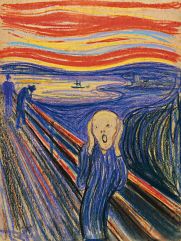
scream

“Keep a stiff upper lip,” people like to say, or, “Make them wonder how you’re still smiling.”  No matter what life does to you, you should get back up on your feet and face it all. Don’t you know that if you react properly under intense pressure, you might just turn into a diamond?

On one hand we are told that life is short and we should not spend it being miserable, that anyone or anything that makes us unhappy should be cut out of our lives. On the other, we hear about how our greatest strength is enduring hardship.

I don’t buy into this idea that putting up with stress and tragedy, letting it affect you as little as possible, is somehow superior. Some people do praise the courage that is required for vulnerability, and others say that “only the gentle are ever truly strong,” but none of these express the real value of sensitivity.

I used to think I was not a sensitive person, which was odd considering the emo journals I have from this time period (and all of my life), but the day a ouija board made me cry was the day I gave up that delusion.

I’ve wondered many times how other people manage what would be unbearable for me, but I also wonder if they have given up on happiness. The greatest advantage to sensitivity, I have found, is that it drives you to improve your life. I can’t handle what many people accept, and the result is that I’m forced to stand up for myself even though I naturally hate to.

When you feel deeply, you reach the limit of emotional pain that you can put up with sooner than others, and so you react sooner. When you experience your feelings viscerally, you can’t ignore them. When you can’t function until you’ve worked through your emotions—you work through them. It’s impossible for a highly sensitive person to accept a lifetime of stress and unhappiness, because these feelings will always be at the forefront of their consciousness. And this is why sensitivity is a strength: it is the force that propels you to improve your life when many people would simply stand still.

You may suffer more, but you will also be more responsive to joy. If a part of your body loses the ability to feel it will not be considered stronger than your other limbs but much weaker. After all, your body should know when to move away from a source of pain. And this is what sensitivity is. It protects us by pushing us away from what hurts us because it is harder to stay than to leave. The downside to this is that sometimes, if you’re like me, you may end up hiding in the bathroom when you’re uncomfortable (or under a desk), but that’s only temporary until you create a place for yourself that you don’t need to run away from.

What is sensitivity, really, except the expectation that we should be treated well? Hurtful actions are only those we do not accept as normal. And the belief that we deserve a good life, with people who love us well, is not a shortcoming. It is the very least we need to pursue our dreams, and we should not be apologizing for it.

5 Things No One Tells You About Choosing a Career

Burnout-help.jpg

Adults constantly lie to children, and never more so than when they talk about careers. We look to the future wild optimism, believing that the hard part is deciding what we want to be when grow up and not the reality check that comes after it. Many of us, if we could go back in time, would give a few words of advice to our younger selves. These would be mine.

  1. You don’t just need to look at what you’re good at, but also what you’re bad at.

When we think about the future, we naturally minimize obstacles. “I’m not a morning person, but I’m sure I’ll get used to it!” we say, or “This job will actually help me overcome my fear of children!” “Sure, I’m not very organized, but I’ll learn to deal with that.”

People are very resistant to change. In many ways (too many ways), I’m very much the same person I was when I was six years old. We also underestimate human variance. What many people are good at naturally we might assume is easy for everyone. It doesn’t work that way. I know doctors who can’t tell time—teachers who are great with children but struggle with addition.

Sometimes we think that because a job isn’t that “hard” it won’t be difficult for us personally, and this is also misguided. You don’t need to go to college to be a waitress, but that doesn’t make it easy. Many jobs are challenging not for the knowledge they require but for the skills, like communicating, organizing, planning, etc.

You can develop as a person, but you can’t change into someone else, and if you have a weakness now you should assume it will be there for the rest of your life. You can find ways to minimize its effect, but you’re always going to be dealing with it. So seriously consider the parts of your personality that can make certain jobs hard for you:

  • Are you a morning person?
  • How do you feel about rules and deadlines?
  • Are you punctual?
  • How much human interaction can you stand?
  • Do you hate either sitting or standing?
  • Do you have a quick temper?
  • Do strangers scare you as much as they scare me?

2. Job satisfaction depends on much more than being in the right field.

Even if you’ve found what you’re meant to do, the details of a specific job are very important. For example, will you have an office with a door you can shut? This can make a big difference for an introvert. Also pay attention to your commute. You might as well calculate it as part of your working hours, especially if you’re driving. Technically I work from 7-2:45, but when you throw in transportation, it ends up being more like 6:15-3:45. This is nine and a half hours. See if your pay is worth that before you accept.

If you’re a highly sensitive person, take your stressors seriously. Avoid noisy work environments and make sure your dress code allows you to be comfortable. Even something that sounds as minor as being required to wear high heels can take a toll on you physically and emotionally.

3. “I like to help people” is unhelpful.

Most of us will say that we enjoy being of service to others, that making a difference in the community is the key to a rewarding job. This is useless information. A much better question to ask is how you enjoy helping people.

You can help people by changing their babies’ diapers or by removing their brain tumors. Pretty much every job is designed to help other people because otherwise no one would pay for it.

I realized recently that I don’t feel as if I’m contributing to the world unless what I’m doing is somehow unique. If it doesn’t rely heavily on my own insights, creativity, and ideas, it doesn’t hold much meaning for me. For example, as much as teaching is supposed to be rewarding, I know that many people can do exactly the same thing I’m doing. Students don’t need me to tell them about this or that grammar lesson because I’m the only who knows about it. It provides a service to the world, but it isn’t changing anything. If I were stuck teaching children their ABCs everyday, I would feel completely useless, unless I was the one who had invented the alphabet.

I’m not alone in this feeling, so consider carefully not whether you want to benefit others but how you want to do it. It could be emotional or physical, a unique contribution or a standard service. But it makes a big difference in terms of your job satisfaction.

4. You can be a good student and a terrible employee.

Maybe at one point in time school was teaching you marketable skills, but I think that time has passed. It’s pretty easy to get by in school on your natural intelligence, something valued surprisingly little in many jobs. Teachers average your overall performance. Employers do not.

If, for example, you have an A average but skip several homework assignments, you’ll end up with something like a B. Not bad. If you approach your job the same way, you will end up not having a job.

Conversely, although you won’t learn enough in school to be prepared for your first job, you will still have to go to learn some of what you need to even be considered for a job. In general, though, you will learn much more by doing than by being taught. So you’re better off spending your teenage years learning how to design a website or use PhotoShop than expecting your teachers to prepare you for life.

5. Your job matters because it will consume much of your waking life.

I used to think that a job was important for a steady income but that I wouldn’t get paid regularly to do what I actually care about. So, I could be like, a doctor, and write books on the side! I actually believed this was possible at some point.

Most jobs will wear you out by the end of the day. You’ll be too tired to do much of anything afterwards. I come home wishing I had a stay-at-home wife who would have dinner waiting for me. I have no idea how people with children manage.

Your job matters because it will consume most of your energy, and if it’s not what you love, you will end up spending a lot less time on what you actually care about. Maybe that’s fine if you don’t have some other passion you wish to pursue, but if you do, the time spent at the steady job you take to pay the bills is time lost.

I have a lot of respect and admiration for people who choose to sacrifice a higher paycheck for a job centered around their goals. They’re paying money for a good life, and that’s a whole lot better than paying for money with your happiness. Whenever I figure out how to do the same thing, I will definitely let you know.